Vaccination is a key component of preventive health services to combat infectious diseases. While pediatric vaccination programs are well-established in the national immunization programs of many countries, leading to substantial (...) Read More
Aerobic, non-spore-forming, Gram-positive bacilli of the Corynebacterium genus are frequently regarded as contaminants when isolated from blood cultures, as they are part of the normal skin and mucosal flora. Among these, Corynebacterium striatum, a coryneform bacterium commonly isolated in clinical microbiology laboratories, has recently been identified as a potential pathogen in both (...) Read More
Bloodstream infections remain a common and life-threatening complication among patients with hematological malignancies. These individuals are prone to bacteremia due to cytotoxic chemotherapy, prolonged and severe neutropenia, and mucosal barrier injury (...) Read More
Chikungunya fever, caused by chikungunya virus, is characterized by acute high-grade fever, rash, myalgia, joint pain, and polyarthralgia. Although its symptoms resemble those of dengue infection, the two diseases differ in prognosis and clinical manifestation. Chikungunya fever is typically self-limiting, lasting for 2–6 days; however, joint pain may persist for more than two years (...) Read More
Mpox, previously known as monkeypox, is a rare zoonotic infectious disease caused by the monkeypox virus (MPXV), an enveloped DNA virus belonging to the Orthopoxvirus genus of the Poxviridae family. MPXV is closely (...) Read More
Despite revolutionary advances in antiretroviral therapy (ART), human immunodeficiency virus (HIV) infection remains a global public health issue. Effective ART regimens have transformed the infection from a fatal disease into a manageable chronic condition, significantly reducing AIDS-related opportunistic infections (...) Read More
Respiratory tract infections are among the most common causes of hospitalizations worldwide. An important part of respiratory tract infections is caused by viral pathogens. Respiratory viruses are associated with 22% to 26.2% of community-acquired pneumonia. However, clinical signs and symptoms, physical examination, routine laboratory tests, and routine microbiological (...) Read More
Multidrug-resistant Gram-negative bacteria cause infections that are difficult to treat and associated with high mortality rates. Such infections are a major problem in Türkiye and worldwide. The carbapenem group of antibiotics is commonly used in infections caused by resistant Gram-negative microorganisms. However, the frequent use of carbapenems has caused more serious issues, including (...) Read More
Patient care strategies in modern medicine have become increasingly complex. Global population aging, the expanding use of immunosuppressive therapy, and the rise in invasive procedures have further underscored the pivotal role of infectious diseases specialists in clinical (...) Read More
Severe acute respiratory syndrome coronavirus 2 (SARS-CoV-2), the virus responsible for COVID-19, has had a profound global impact, infecting approximately 800 million people and causing more than 7 million deaths. In infected individuals, the immune system plays a central role in (...) Read More
Inherited defects in the adenosine deaminase gene result in severe combined immunodeficiency. Cytopenias caused by autoimmune disorders or bone marrow failure occur in 50% of patients, presenting as pure red cell aplasia, neutropenia, thrombocytopenia, or (...) Read More
Tularemia is a zoonotic infectious disease caused by Francisella tularensis, a Gram-negative intracellular coccobacillus. The oropharyngeal form of tularemia typically presents with fever, severe sore throat, exudative tonsillopharyngitis, and lymphadenopathy. Immunoglobulin A nephropathy, the most common (...) Read More
Prosthetic joint infection (PJI) is a serious complication due to its potential for joint destruction, leading to substantial morbidity and mortality. The risk of PJI is higher following knee arthroplasty than hip arthroplasty. Read More
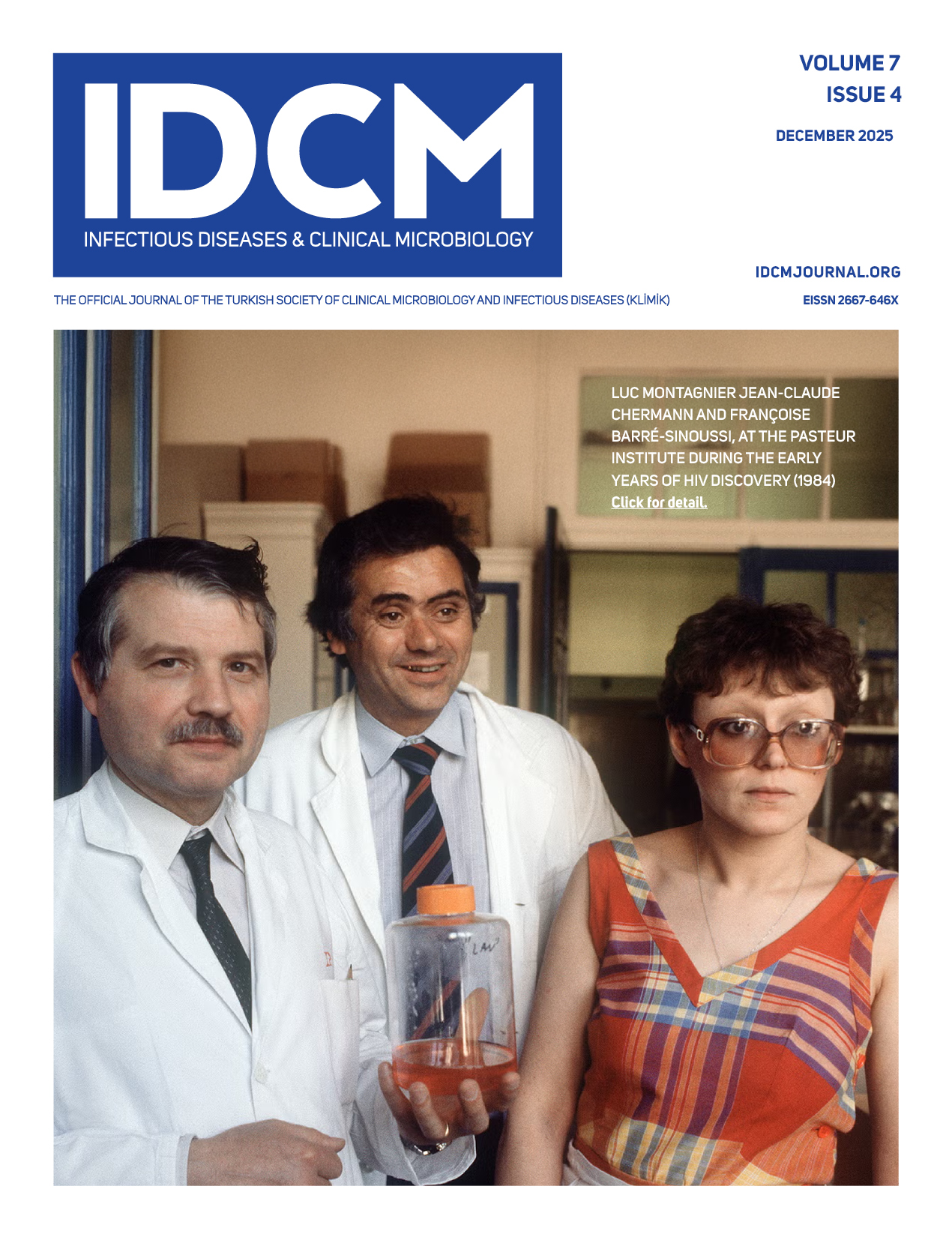
Three French virologists at the Pasteur Institute in Paris, François Barré-Sinoussi, Luc Montagnier, and Jean-Claude Chermann, are recognized as the pioneers of the AIDS epidemic for their groundbreaking discovery of the etiologic agent of AIDS. This discovery (...) Read More
A 65-year-old woman with diabetes mellitus, hypertension, and relapsed acute myeloid leukemia previously treated with allogeneic hematopoietic stem cell transplantation (HSCT) was hospitalized for four months for chemotherapy, complicated by intermittent febrile (...) Read More
We report a unique case of post-treatment HIV control in a married couple from Türkiye, contributing to the growing evidence on the heterogeneity of post-treatment controllers. In 2018, a 36-year-old woman and her 28-year-old male partner were concurrently diagnosed with (...) Read More
My father, Prof. Hasan Kurtuluş Töreci, who passed away at the age of 92, was a devoted family man, teacher, colleague, and microbiologist. Born in Eskisehir in 1933, he was shaped by the newly established education system of the (...) Read More
I commemorate with profound love and longing my beloved husband, Prof. Bülent Gürler, whose passing at such an unexpected time deeply grieved me, our beloved son, and all his loved ones. For 42 years, Bülent Gürler was not only my life partner but also (...) Read More
The Editors sincerely thank to all reviewers of IDCM for their generous contribution to the Journal. The quality of the Journal depends on their valuable expertise. Read More