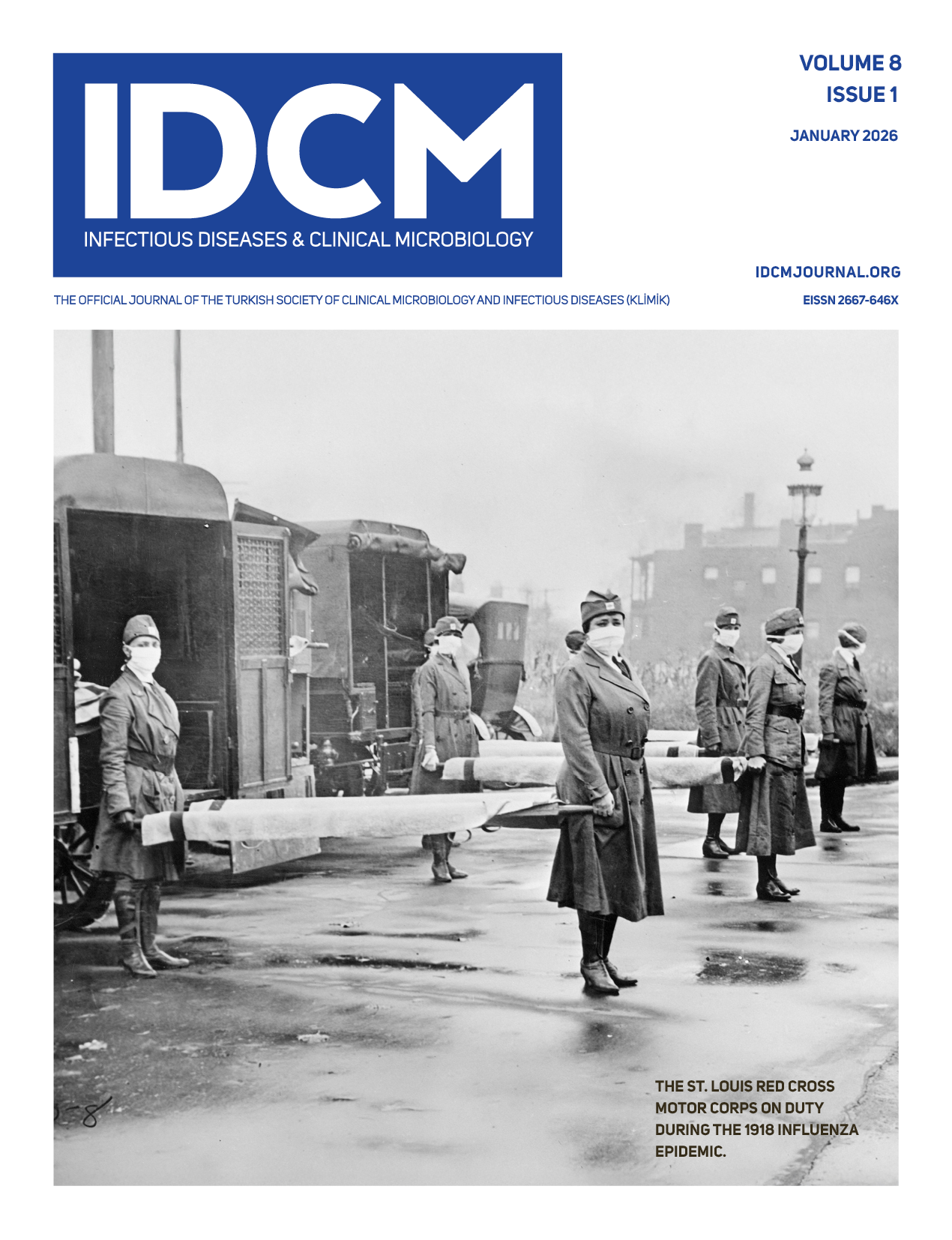
As Infectious Diseases and Clinical Microbiology (IDCM) prepares for 2026, the Journal has reached an important stage. In recent years, IDCM has shown steady growth. At the same time, the journal has (...) Read More
Zoonotic tuberculosis (zTB) is a form of human tuberculosis caused by animal-adapted members of the Mycobacterium tuberculosis complex (MTBC). Historically, Mycobacterium bovis has been regarded as the principal agent of zTB, with transmission primarily occurring through the (...) Read More
Scientific presentations at CROI 2025 underscored the critical importance of prevention research and were highly promising with regard to expanding prevention tools, ranging from implementation science studies to innovative (...) Read More
Childhood vaccination is a cornerstone of public health, substantially reducing morbidity and mortality from vaccine-preventable infectious diseases. Nevertheless, vaccine hesitancy and refusal have emerged as growing global challenges (...) Read More
Respiratory tract infections (RTIs) are a leading cause of morbidity and mortality worldwide, particularly among vulnerable populations such as young children, older adults, and immunocompromised individuals. Read More
Natural disasters are catastrophic events that occur as part of the natural ecological system and may result in fatalities, traumatic injuries, secondary morbidity, and substantial economic losses. Among natural disasters causing human (...) Read More
Mucormycosis is a fungal infection caused by members of the order Mucorales, including Rhizopus, Mucor, Rhizomucor, Actinomucor, Apophysomyces, Cunninghamella, Lichtheimia, Saksenaea, and Syncephalastrum (...) Read More
Brucella melitensis is the most common causative agent of human brucellosis worldwide and in Türkiye (1,2). Genomic evidence obtained from an approximately 8000-year-old sheep specimen in Menteşe Höyük in northwestern Türkiye (...) Read More
Salmonella infections are among the most common infectious diseases worldwide, with an estimated 550 million cases annually, particularly affecting children under five years of age (1). Although these infections are often mild (...) Read More
Infections caused by carbapenem-resistant Gram-negative bacteria have become a significant global public health problem due to the growing burden of antimicrobial resistance. According to predictive analyses, approximately 4.95 million (...) Read More
HIV-2 was identified in 1986 following the isolation of the virus from West African patients. Although HIV-1 is responsible for the majority of the global AIDS pandemic, HIV-2 remains a significant cause of infection in regions where (...) Read More
Diabetes mellitus (DM) is a major global health burden, and its prevalence has nearly doubled over the last 25 years. Individuals with DM are significantly more prone to developing skin and soft tissue infections (SSTIs), including cellulitis, osteomyelitis, and post-operative wound (...) Read More
A 60-year-old man with diabetes mellitus presented with a one-month history of fever and malaise. His medical history included benign prostatic hyperplasia, bilateral nephrolithiasis, and a horseshoe kidney. Read More
This is a study of Peyami Safa’s Dokuzuncu Hariciye Koğuşu (Ninth Surgical Ward) as an architectural and phenomenological illness narrative that illuminates how built environments—marked by decay sensory intensity, or polished refinement—shape the embodied experience of sickness. Read More
Women and gender minorities remain underrepresented in senior academic roles across medicine, and this is particularly true in infectious diseases (ID) and clinical microbiology (CM). Despite near parity at the trainee level, women remain underrepresented (...) Read More
For much of the 20th and early 21st centuries, influenza was considered the paradigmatic pandemic virus. This expectation was rooted in repeated historical pandemics, extensive animal reservoirs, and the virus’s (...) Read More