Graphical Abstract
Introduction
Earthquakes are natural disasters that impact thousands of individuals. The mass destruction caused by earthquakes leads to a surge in admissions to healthcare facilities. In addition to direct structural damage, earthquake-related secondary disasters such as floods, landslides, and fires significantly increase the demand for healthcare services. In large-scale earthquakes, when local health centers are often overwhelmed, earthquake victims are typically transferred to tertiary healthcare centers after initial stabilization (1,2).
Following the 1999 Marmara earthquake, trauma was identified as the primary reason for hospital admissions. As the duration of hospitalization for earthquake victims increases, the risk of developing various systemic infections also rises. Deep surgical site infections, bacteremia, pneumonia, urinary tract infections, and sepsis are among the most frequently observed complications (3). Similarly, during the 2008 Wenchuan earthquake in China, pneumonia, bacteremia, surgical site infections, and polymicrobial infections were reported (4).
The February 2023 earthquakes in south-eastern Türkiye, with magnitudes of 7.7 and 7.6 Mw, constituted one of the most devastating disasters in the country’s history, resulting in over 50,000 deaths and approximately 200,000 injuries. Such disasters lead to complex trauma, including head, chest, and extremity injuries and extensive soft tissue damage, which are highly susceptible to environmental contamination. Historically, wound infections among earthquake survivors have shifted from common skin flora to environmental and hospital-acquired multidrug-resistant (MDR) pathogens. Factors such as prolonged entrapment under rubble, delayed surgical debridement, and the need for intensive care unit (ICU) support further elevate the risk of healthcare-associated infections (HAIs), particularly those caused by Gram-negative bacilli (1,2,5).
The February 2023 earthquake severely damaged local healthcare infrastructure, necessitating large-scale patient transfers to unaffected hospitals (2). As a tertiary referral center, Hacettepe University Hospital received critically injured survivors requiring specialized care (6). Given the high risk of Gram-negative bacterial wound infections among earthquake survivors extricated from rubble, antibacterial prophylaxis is commonly recommended for these trauma patients (1). However, there is no clear consensus regarding the optimal prophylactic antibiotic regimen for earthquake-related injuries (7,8). This study aimed to examine whether the spectrum of antibacterial prophylaxis affects wound infection rates in hospitalized survivors of the February 2023 earthquake in south-eastern Türkiye transferred to a tertiary care center outside the disaster zone.
Materials and Methods
Study Design and Setting
A retrospective study was conducted at a 1100-bed tertiary care university hospital in Ankara, Türkiye. The demographic and clinical characteristics of earthquake survivors transferred to Hacettepe University Hospital between February 6, 2023, and May 1, 2023, were retrospectively analyzed from electronic medical records.
The intensive care unit team urgently developed a standardized clinical guideline for the management of earthquake survivors to optimize their definitive care. The infectious diseases team contributed to this guideline by developing tailored antibiotic prophylaxis recommendations based on injury characteristics. For wounds contaminated with soil or debris, we recommended ciprofloxacin combined with clindamycin (with cefepime or ceftazidime substituted for patients with QT interval (QTc) intervals >450 ms). Patients with tissue loss or requiring fasciotomy but without soil contamination received clindamycin monotherapy. Both regimens were limited to a maximum duration of seven days. For lower-risk injuries without soil contamination, tissue loss, or a requirement for fasciotomy, a single preoperative dose of either cefazolin or clindamycin was advised. Only the initial wound culture obtained at diagnosis was included in the study, whereas subsequent cultures from recurrent infections were excluded. Tetanus vaccination (with or without immunoglobulin, based on wound characteristics and vaccination status) was routinely administered during initial wound management.
Definitions
Wound infections were defined according to the Centers for Disease Control and Prevention National Healthcare Safety Network (NHSN) Skin and Soft Tissue Infection (SSTI) criteria, requiring either purulent drainage, pustules, or vesicles at the affected site, or at least two local signs (pain, swelling, erythema, or heat) supported by a positive wound culture, histopathological evidence, or a diagnostic rise in antibody titers (9). Healthcare-associated infections were defined according to CDC/NHSN criteria using the 3-calendar-day rule, whereby an infection was classified as healthcare-associated if the date of event occurred on or after hospital day 3 (10). Broad-spectrum antibacterial prophylaxis was defined as the use of ciprofloxacin- or ceftriaxone-based regimens or amoxicillin-clavulanic acid, whereas cefazolin and clindamycin were classified as narrow-spectrum prophylaxis.
Antimicrobial susceptibility categories were defined according to the international consensus criteria proposed by Magiorakos et al. (11). Specifically, MDR was defined as non-susceptibility to at least one agent in three or more antimicrobial categories. Furthermore, isolates were classified as extensively drug-resistant (XDR) if they exhibited non-susceptibility to at least one agent in all but two or fewer antimicrobial categories, meaning that the isolate remained susceptible to only one or two categories. Difficult-to-treat resistance (DTR) was defined in accordance with the criteria proposed by Kadri et al. (12) as non-susceptibility to all first-line, high-efficacy, and low-toxicity antimicrobial categories, specifically including all β-lactams (cephalosporins and carbapenems) and fluoroquinolones (e.g., ciprofloxacin and levofloxacin).
Microbiological Evaluation
Wound cultures were obtained according to the indications specified by the consulting physician. The laboratory conducted routine Gram staining of wound cultures to differentiate contamination from infection. Species identification was performed by matrix-assisted laser desorption/ionization time-of-flight mass spectrometry (MALDI-TOF MS; Bruker Daltonics, Bremen, Germany). Antimicrobial susceptibility testing was performed using the Phoenix automated system (Becton Dickinson Diagnostic Systems, Sparks, MD, USA), and the standard Kirby-Bauer disk diffusion method was used for Acinetobacter spp. Susceptibility results were interpreted according to the European Committee on Antimicrobial Susceptibility Testing (EUCAST) Version 13.0 (13).
Statistical Analysis
Statistical analysis was performed using IBM SPSS Version 26.0 (IBM Corp., Armonk, NY, USA). The normality of continuous variables was assessed using the Kolmogorov-Smirnov test, visual inspection of histograms and detrended Q-Q plots, and analysis of the coefficient of variation, skewness, and kurtosis values. Descriptive data were presented as mean ± standard deviation for normally distributed continuous variables and as median (interquartile range [IQR]) for non-normally distributed data. Categorical variables were expressed as frequencies and percentages. For group comparisons, the χ² test or Fisher’s exact test was used for categorical variables, and the Student’s t-test or the Mann-Whitney U test was used for continuous variables, as appropriate.
Univariable logistic regression analysis was performed to identify candidate risk factors for wound infection. Variables with a p-value < 0.20 in the univariable analysis, as well as variables considered clinically relevant regardless of their statistical significance, were included in the multivariable model. Multicollinearity among independent variables was assessed using the Phi coefficient, with a correlation coefficient (r) > 0.60 considered indicative of significant multicollinearity. Multivariable logistic regression was then conducted using the backward elimination (Likelihood Ratio) method to identify independent risk factors. The results were reported as odds ratios (ORs) with 95% confidence intervals (CIs), with multivariable results expressed as adjusted ORs (aORs). Statistical significance was defined as p < 0.05.
Ethics approval and consent to participate
This study was conducted in compliance with the ethical principles outlined in the Declaration of Helsinki and received approval from the Health Sciences Research Ethics Committee of Hacettepe University (SBA 2023/01-16). Informed consent was waived due to the retrospective nature of the study.
Results
Of the 274 patients transferred to the emergency department, 113 with wounds were included in the study. Thirty patients diagnosed with wound infections at admission were excluded. The final cohort consisted of 66 patients who had received antibacterial prophylaxis and 17 who had not. Among those who received prophylaxis, 12 (18.2%) developed wound infections after hospital admission. Of these, 10 infections were diagnosed while the patients were still receiving prophylaxis, whereas two were diagnosed four days after its discontinuation. Among patients who did not receive prophylaxis, only one patient (5.9%) developed a wound infection.
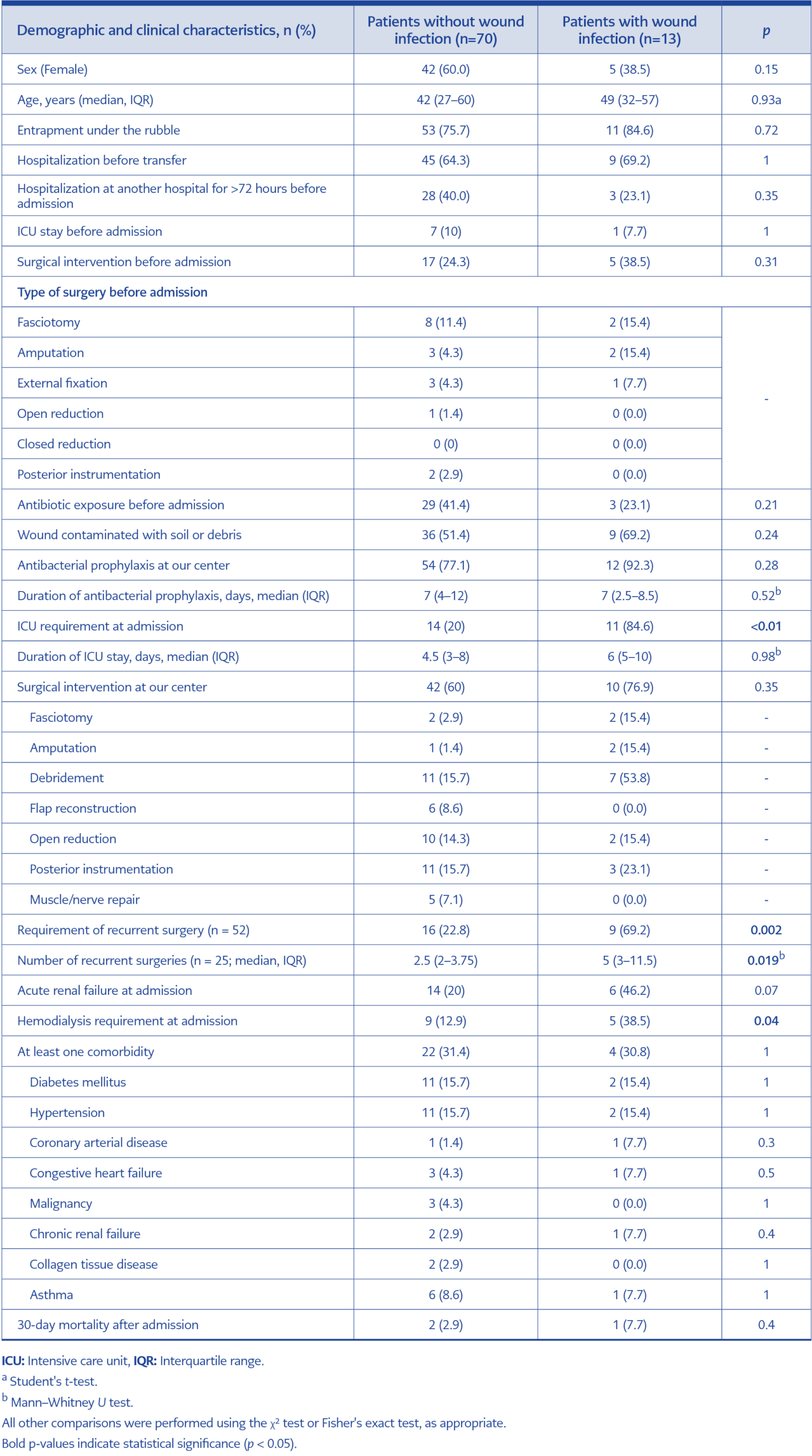
Table 1. Demographic and clinical characteristics of patients according to the development of wound infection after admission.
Patients who developed wound infections after hospital admission were significantly more likely to require ICU admission at presentation (84.6% vs. 20%, p < 0.01), undergo recurrent surgeries (69.2% vs. 22.8%, p = 0.002), and require hemodialysis (38.5% vs. 12.9%, p = 0.04). Additionally, infected patients had a higher median number of recurrent surgeries (5 vs. 2.5, p = 0.019) and a trend toward a higher frequency of acute renal failure (46.2% vs. 20%, p = 0.07). While wound contamination with soil or debris was more common in infected cases (69.2% vs. 51.4%), this difference was not statistically significant (p = 0.24). No significant differences were found in age, sex, comorbidities, or mortality, though infected patients had lower rates of prior antibiotic exposure (23.1% vs. 41.4%, p = 0.21) (Table 1).
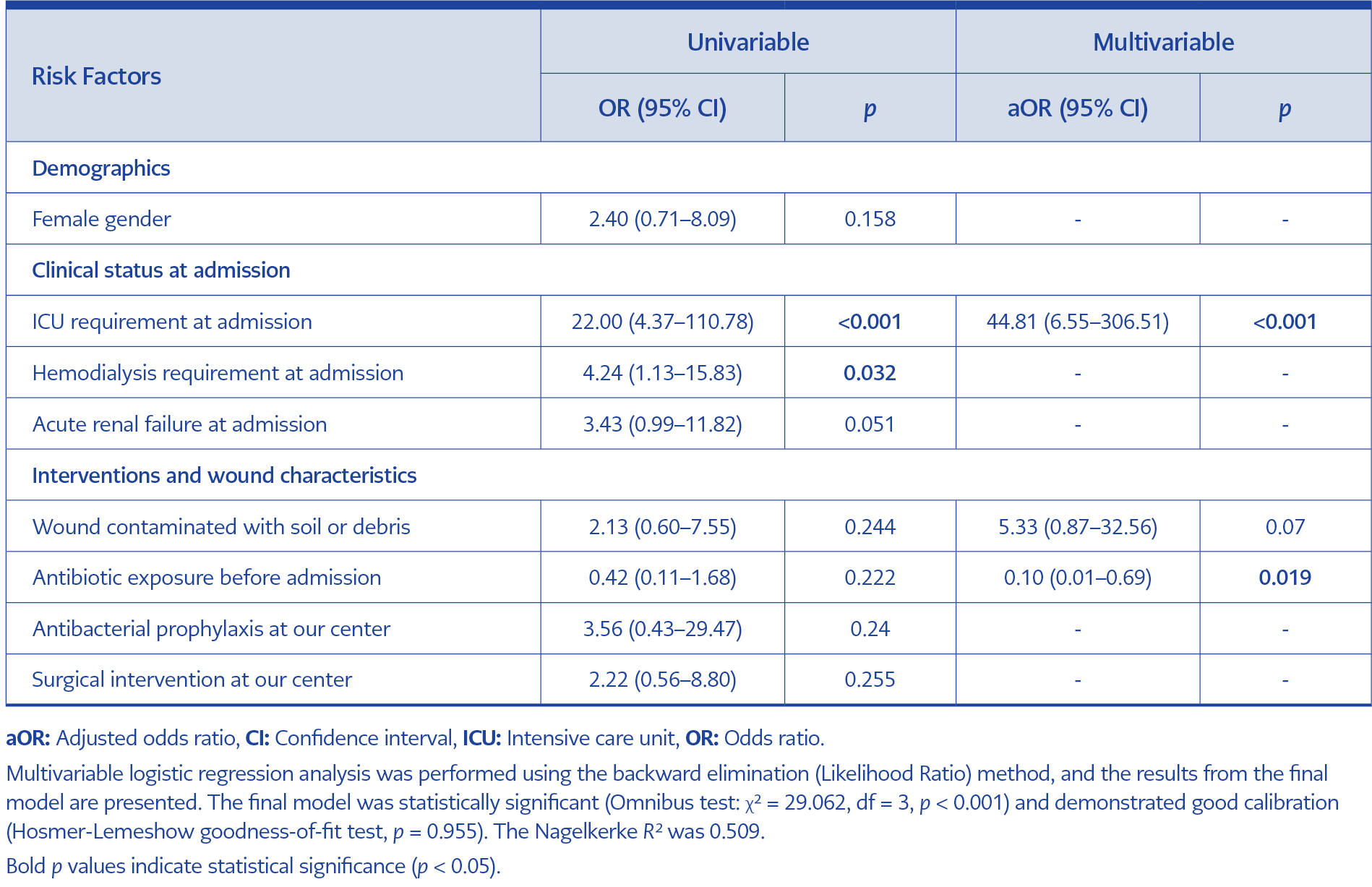
Table 2. Univariable and multivariable logistic regression analysis of risk factors for wound infection.
The results of the univariable and multivariable logistic regression analyses for risk factors associated with wound infection are summarized in Table 2. In the univariable analysis, ICU requirement (p < 0.001) and hemodialysis requirement (p = 0.032) were significantly associated with an increased risk of infection. Although not statistically significant, acute renal failure at admission showed a borderline association (p = 0.051). After adjusting for potential confounders in the multivariable model using the backward elimination method, ICU requirement remained an independent risk factor (aOR 44.81; 95% CI 6.55–306.51; p < 0.001). Notably, antibiotic exposure prior to admission was identified as a significant protective factor (aOR 0.10; 95% CI 0.01–0.69; p = 0.019). Furthermore, wounds contaminated with soil or debris showed a trend toward an increased infection risk in the final model (aOR 5.33; 95% CI 0.87–32.56; p = 0.07).
Broad-spectrum antibiotic prophylaxis was administered to 22 of the 70 patients who did not develop wound infections (31.4%), with the most common regimen being ciprofloxacin + clindamycin (n = 14). Other regimens included ciprofloxacin monotherapy (n = 1), ceftriaxone (n = 4), ceftriaxone + clindamycin (n=1), ciprofloxacin + ceftriaxone (n = 1), and amoxicillin-clavulanate (n = 1). In contrast, 11 out of 13 patients (84.6%) who developed wound infections had received broad-spectrum antibiotics, primarily ciprofloxacin + clindamycin (n = 8), followed by ciprofloxacin (n = 1), ceftriaxone (n = 1), and ceftriaxone + clindamycin (n = 1). The rate of broad-spectrum prophylaxis was significantly higher in patients who developed infections (84.6% vs. 31.4%, p < 0.001).
Among patients without infections, 32 (45.7%) received narrow-spectrum prophylaxis, including clindamycin (n = 9), cefazolin (n = 8), and cefazolin + clindamycin (n = 15). Only one patient (7.7%) in the infected group received narrow-spectrum prophylaxis (cefazolin).
Eighteen bacterial isolates were identified from 13 patients with wound infections, consisting of four XDR Acinetobacter baumannii, five XDR Klebsiella pneumoniae, three XDR Escherichia coli, one MDR Pseudomonas aeruginosa, one MDR Proteus species, and one MDR Enterococcus faecium. Notably, three isolates (P. aeruginosa, Enterobacter cloacae, and E. faecium) remained susceptible to all tested antibiotics. The predominance of XDR Gram-negative pathogens, particularly A. baumannii and K. pneumoniae, accounted for the majority (71%) of cultured isolates in these wound infections.
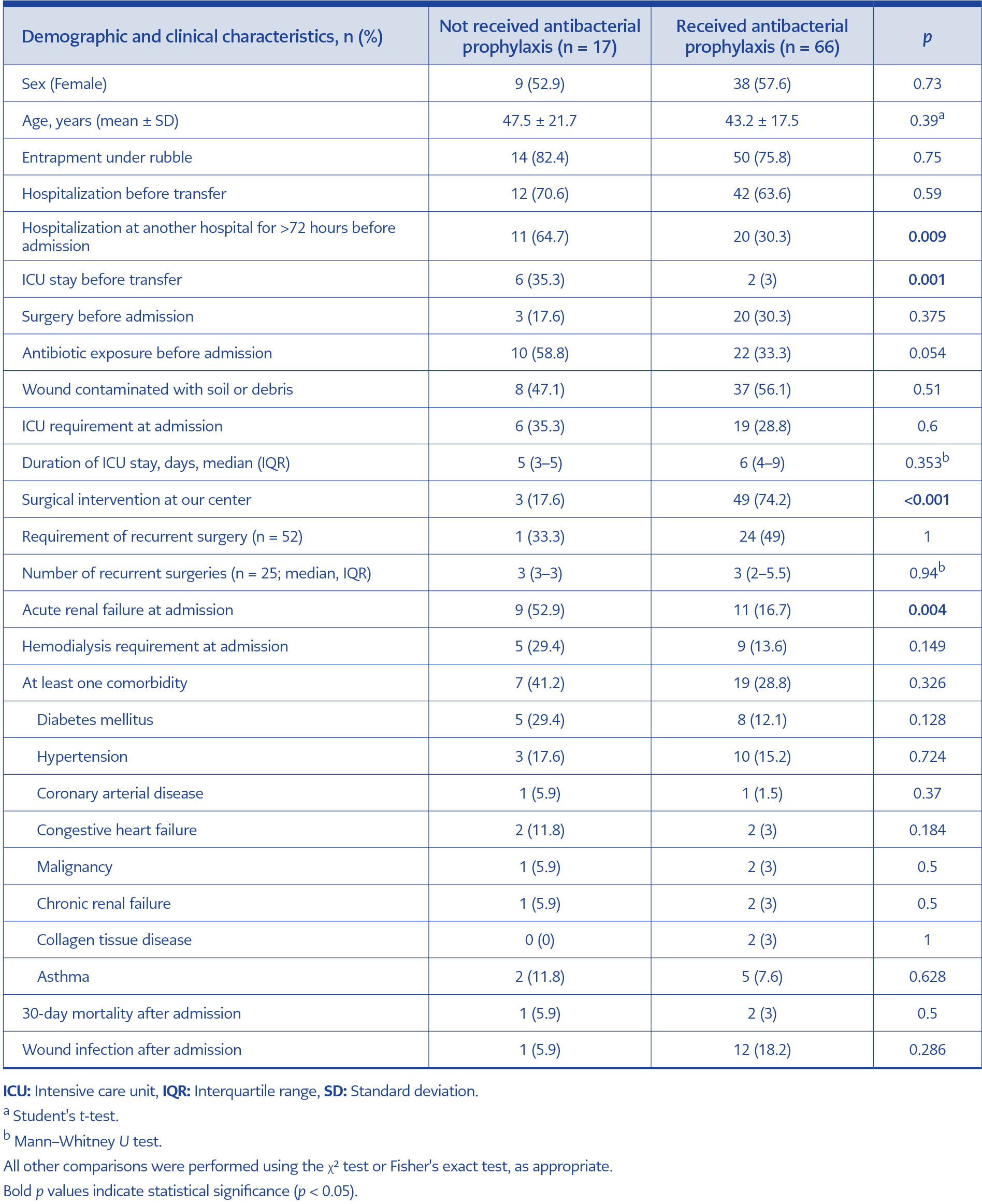
Table 3. Demographic and clinical characteristics of patients according to antibacterial prophylaxis after admission.
Demographic and clinical characteristics of patients who received prophylaxis versus those who did not are shown in Table 3. Patients who did not receive prophylaxis were more likely to have been hospitalized at another institution for more than 72 hours before admission (64.7% vs. 30.3%, p = 0.009) and to have required ICU care before admission (35.3% vs. 3%, p = 0.001). They also had higher rates of acute renal failure (52.9% vs. 16.7%, p = 0.004). Surgical intervention at our hospital was significantly more common among patients who received prophylaxis (74.2% vs. 17.6%, p < 0.001).
Discussion
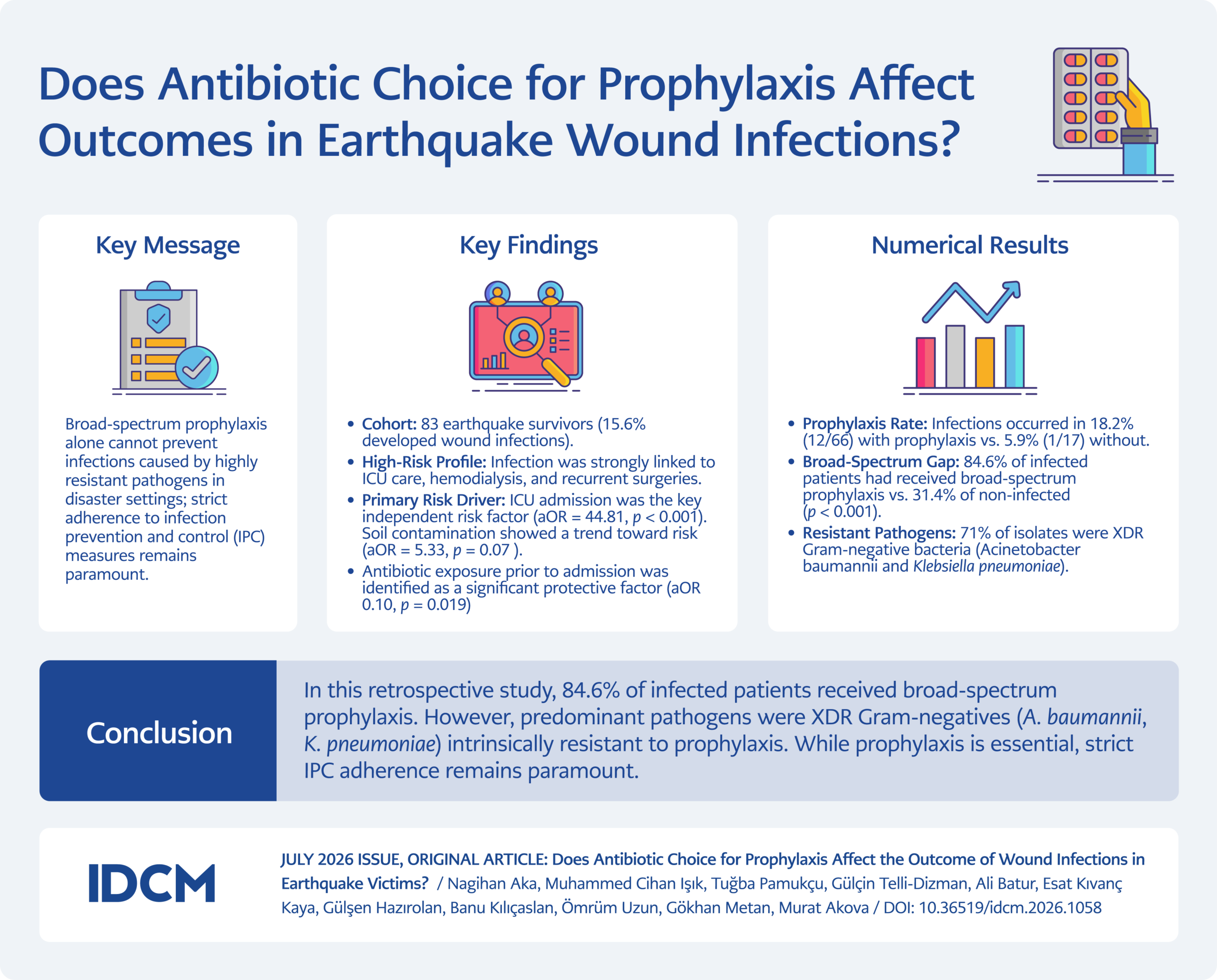
In this retrospective analysis, 84.6% of patients who developed wound infections had received broad-spectrum antibacterial prophylaxis. However, the predominant causative pathogens were XDR Gram-negative bacteria, most notably A. baumannii and K. pneumoniae, which are inherently resistant to the administered prophylactic coverage. Our findings align with emerging literature regarding the microbiological landscape following the February 2023 Türkiye earthquakes. Törüyenler-Coşkunpınar et al. (14) reported that MDR microorganisms were detected in 57.4% of cases, with A. baumannii being identified as the primary pathogen (53.6%). Similarly, Hasanoglu et al. (15) highlighted a high prevalence of MDR pathogens, identifying A. baumannii in 49.4% of cultures and noting that 76% of wound isolates were MDR. The trend of high-level resistance is further supported by Gülen et al. (16), who reported carbapenem resistance rates of 83.3% for K. pneumoniae and 100% for A. baumannii. Furthermore, Gök et al. (17) identified Acinetobacter spp. as the most frequent isolate (26.3%), with a notable 86.5% carbapenem resistance rate. This microbiological shift is not a new phenomenon. In a review encompassing 10 major earthquakes—dating back to the 1999 Marmara earthquake—it was shown that Gram-negative bacteria consistently dominated wound infections, accounting for 68–83% of cases, with A. baumannii identified as the most prevalent pathogen (18). Collectively, these data suggest that extensive environmental contamination and healthcare-associated acquisition of XDR pathogens likely render standard or even broad-spectrum prophylactic regimens ineffective during large-scale seismic disasters. Although current trauma guidelines recommend narrow-spectrum, short-course prophylaxis for trauma patients (7,8), we adopted broader-spectrum and longer-duration regimens due to earthquake-specific risks. Despite this approach, wound infections continued to be predominantly caused by XDR Gram-negative pathogens.
In addition to traditional risk factors such as ICU care and hemodialysis (2,5,16,19), our data showed that repeated surgical interventions were associated with wound infections (Table 1). Although fasciotomy is essential in the management of compartment syndrome, it is associated with an increased risk of infection and sepsis, potentially leading to severe complications such as amputation (17). While early surgical debridement remains the cornerstone of treatment to reduce microbial load and prevent necrosis, repeated procedures may increase exposure to nosocomial pathogens. This is further reflected in our multivariable analysis, in which ICU requirement emerged as an independent risk factor for infection, likely reflecting the combined impact of clinical severity and prolonged exposure to the hospital environment. Conversely, the protective effect of antibiotic exposure prior to admission suggests that early antimicrobial intervention may be beneficial in reducing the risk of infection (Table 2). Furthermore, meticulous wound care and rigorous hygiene practices are vital to prevent the spread of MDR pathogens, as disruptions in sterile protocols—often due to high patient volumes—can facilitate healthcare-associated outbreaks (16,20).
This risk of healthcare-associated acquisition is further exemplified by a retrospective case–control study conducted at Kayseri City Hospital, which included 106 earthquake victims who received orthopedic surgical care. In that study, prolonged entrapment under rubble and the requirement for hemodialysis were identified as significant risk factors for XDR A. baumannii infection. Importantly, following an observed surge in A. baumannii-associated wound infections, environmental sampling identified the organism on dressing trolleys and scissors used in clinical settings (19). Similarly, the high rates of XDR infections in our cohort may have been influenced by environmental contamination and cross-transmission under the demanding conditions of a large-scale disaster response.
Non-compliance with hand hygiene protocols and contact isolation measures, coupled with contaminated medical equipment, can facilitate rapid nosocomial transmission of XDR A. baumannii during public health emergencies (19,21,22). In our hospital, the incidence of hospital-acquired A. baumannii infections increased significantly from 3.05 (95% CI 2.32–3.92) to 6.34 (95% CI 5.25–7.58) per 10,000 patient-days when comparing the 3-month pre-earthquake period with the 3-month period following the admission of earthquake victims. This trend was observed across all hospital units, with infection rates doubling in both ICUs (from 4.87 [95% CI 3.42–6.71] to 9.34 [95% CI 7.31–11.76] per 1000 patient-days) and general wards (from 0.52 [95% CI 0.32–0.82] to 1.05 [95% CI 0.75–1.45] per 1000 patient-days).
Regarding XDR K. pneumoniae, a clinical upward trend was observed across the hospital following the earthquake, although it did not reach statistical significance. The overall incidence rose from 50.2 (95% CI 43.4–57.7) to 59.7 (95% CI 52.5–67.8) per 10,000 patient-days. This increase was also reflected in general wards, where rates rose from 2.5 (95% CI 2.0–3.1) to 3.2 (95% CI 2.6–3.8) per 1000 patient-days. In contrast, the incidence in ICUs remained relatively stable, increasing only slightly from 21.2 (95% CI 17.7–25.1) to 22.2 (95% CI 18.2–26.7) per 1000 patient-days. These data suggest that while the epidemic surge was most prominent for A. baumannii, XDR K. pneumoniae maintained a persistent and slightly increasing presence, contributing significantly to the burden of DTR infections in the post-earthquake period.
This study has several limitations. First, its retrospective design and single-center nature limit the generalizability of our findings. Second, while a multivariable analysis was performed, the small number of infection events (n = 13) resulted in wide confidence intervals and introduced a potential risk of overfitting, necessitating a cautious interpretation of these findings. Third, although we used temporal criteria and resistance profiles to distinguish healthcare-associated from community-acquired infections, we cannot completely rule out the possibility that some infections were caused by soil-related inoculation of XDR pathogens at the time of injury. Finally, our institutional prophylaxis protocol was developed ad hoc during the disaster response; therefore, our findings may not be directly applicable to settings with different antibiotic resistance patterns or treatment protocols. Despite these limitations, our study provides valuable real-world data on the challenges of preventing wound infections in earthquake victims.
In conclusion, our findings demonstrate that while antibacterial prophylaxis remains essential, particularly for contaminated wounds, strict adherence to infection prevention and control (IPC) measures is paramount. Major disasters often bring an overwhelming patient burden that can diminish compliance with IPC practices, leading to a rise in XDR infections. Under these circumstances, even appropriate prophylactic regimens may fail to prevent DTR infections. To maintain adequate hygiene standards, it is vital to implement additional protocols and proactive awareness mechanisms during disaster responses. Ultimately, successful management depends on combining appropriate antimicrobial use with rigorous environmental infection control measures, ensuring IPC integrity even under extreme workload conditions.