Introduction
Multidrug-resistant organisms (MDROs) are common causes of healthcare-associated infections (HAIs), which result in adverse patient outcomes, substantial morbidity and mortality, and increased healthcare-related costs (1–3). A growing body of literature has confirmed the important role of environmental cleaning in preventing transmission of MDROs and HAIs (4,5). Occupancy of a room previously occupied by an MDRO carrier has been shown to increase the risk of acquiring healthcare-associated pathogens, including but not limited to methicillin-resistant Staphylococcus aureus (MRSA), vancomycin-resistant Enterococcus (VRE), carbapenem-resistant Enterobacterales (CRE), multidrug-resistant Acinetobacter baumannii, Clostridioides difficile, norovirus, and Candida auris (6,7). Many of these organisms can survive on inanimate surfaces for extended periods, ranging from days to months, depending on factors such as humidity, temperature, and surface type (8).
Environmental decontamination is typically described as a two-step process involving cleaning followed by disinfection (9). However, workflow constraints, including limited time and staffing, represent major barriers to its consistent implementation in busy clinical environments (10,11). To facilitate effective decontamination, the selected agent should ideally be both efficacious and simple to use (12). A one-step combined detergent-disinfectant has been advocated as an alternative to traditional two-step cleaning and disinfection to simplify the process, except in situations involving spills of blood or body fluids or contamination with spore-forming organisms such as C. difficile (9).
The Hospital Authority of the Hong Kong Special Administrative Region of the People’s Republic of China (HKSAR, China) provides approximately 90% of all inpatient services in the territory. The Hospital Authority Guidelines on Environmental Decontamination in Clinical Areas (“Hospital Authority guideline”) specify that decontamination of high-touch areas (HTAs) requires a two-step process consisting of cleaning with detergent, followed by disinfection with an appropriate disinfectant such as a sodium hypochlorite solution of an appropriate concentration (e.g., 1000 ppm). Combined detergent-disinfectant products are listed under “new technologies” and may be considered during outbreaks or upon the recommendation of the local infection control team (ICT).
Despite their inclusion in the Hospital Authority guideline, real-world evidence supporting the efficacy and cost-effectiveness of combined detergent-disinfectants in routine decontamination of the clinical environment remains limited. To address this gap and the practical need to streamline environmental decontamination in busy inpatient settings, we conducted this study at Pamela Youde Nethersole Eastern Hospital, a 1700-bed acute care hospital within the Hospital Authority of the HKSAR, China. The study aimed to assess whether a combined detergent-disinfectant could achieve effective environmental hygiene and to quantify its associated cost implications.
Materials and Methods
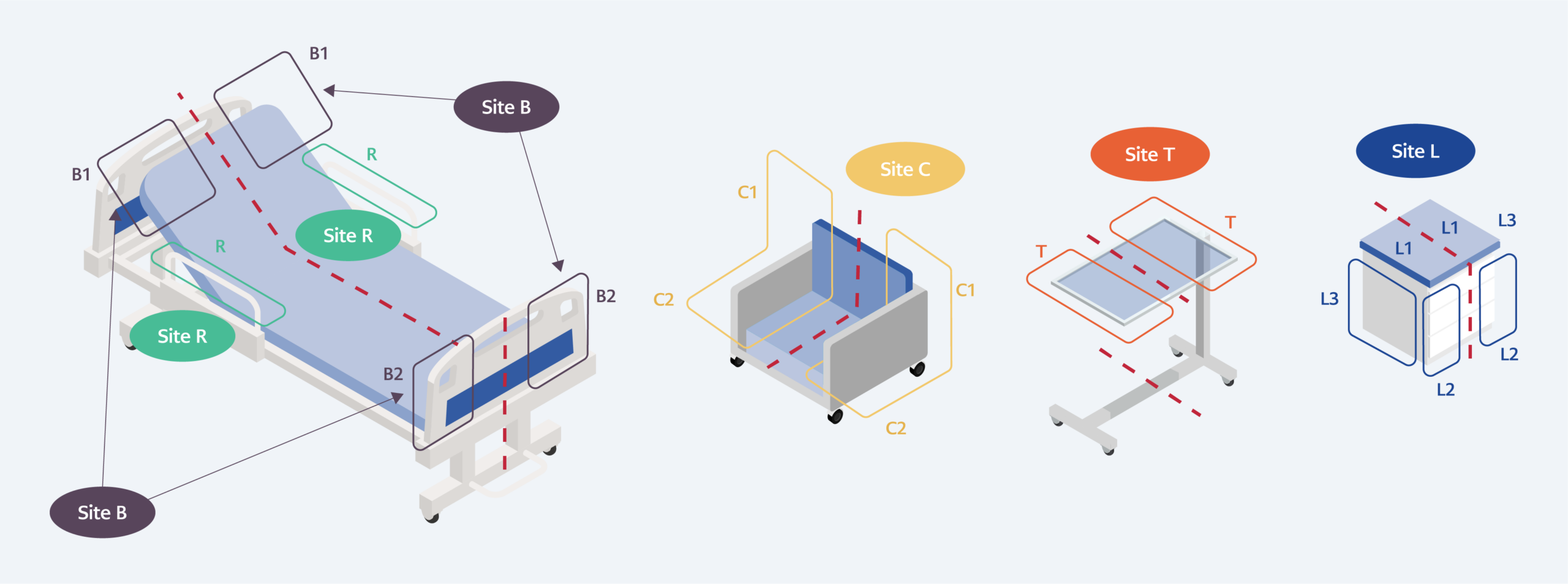
Figure 1. The five designated sites for environmental sampling, with the patient’s surroundings divided into two halves for application of the conventional and new decontamination methods.
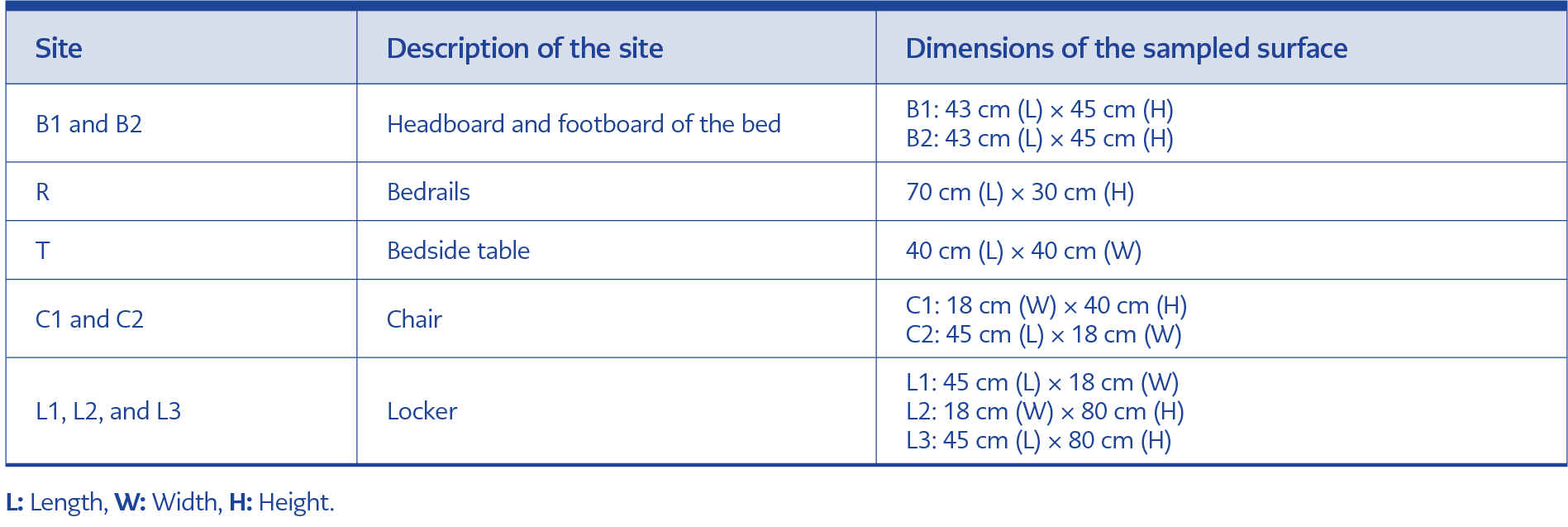
Table 1. Designated high-touch areas (HTAs) and dimensions of the sampled surfaces.
This pragmatic controlled study was conducted over a six-month period in inpatient wards (medical, surgical, and orthopedic) at Pamela Youde Nethersole Eastern Hospital, HKSAR, China. Patients with newly diagnosed MRSA colonization or infection were included. The surrounding area of each patient was divided into two equal halves, with five designated sampling sites per half (Figure 1 and Table 1), all classified as HTAs according to the Hospital Authority guideline. Each half was randomly assigned to one of two decontamination methods, such that one half was cleaned using the conventional two-step process (cleaning with detergent followed by disinfection with a 1000 ppm hypochlorite solution), while the other half was cleaned using a one-step combined detergent-disinfectant. Decontamination of both halves was performed by the same healthcare worker using standardized cleaning techniques consistent with routine clinical practice.
Environmental samples were cultured for MRSA detection. A “pass” result indicated that no MRSA was detected, whereas a “fail” result indicated that MRSA was detected. Adenosine triphosphate (ATP) bioluminescence was measured using 3MTM Clean-TraceTM luminometer (3M Health Care, St. Paul, MN, USA) to assess overall surface contamination. ATP results were classified as “pass” (≤250 relative light units [RLUs]) or “fail” (>250 RLUs). The 250-RLU threshold is a commonly used benchmark to define surface cleanliness, with well-cleaned surfaces with little organic material typically yielding 250–300 RLUs and poorly cleaned surfaces typically yielding >1000 RLUs (13,14).
For MRSA culture, environmental samples were obtained using PolywipeTM sponges (Medical Wire & Equipment, Corsham, United Kingdom) from the five HTA sites on either the left or right half of the patient’s surroundings before decontamination (control samples). The two halves were then decontaminated using either the conventional method or the new method (defined below). A total of 15 environmental samples (five sites × three study arms) were collected per patient. Each sample was then processed for MRSA isolation. For ATP measurement, two HTA sites, Site R (bedrails) and Site T (bedside table), were assessed before and after decontamination, yielding six ATP swabs per patient.
The number of disposable wipes used and the time spent (in minutes) were recorded for cost analysis. Two decontamination strategies were evaluated: a conventional two-step method and a one-step combined detergent-disinfectant method. The conventional method consisted of cleaning with Virex® II 256 (Diversey, Sturtevant, WI, USA) and water, followed by disinfection with a 1000 ppm hypochlorite solution. The new method involved a one-step application of a solution of ActichlorTM Plus (Ecolab, Leeds, United Kingdom) (1000 ppm), a combined detergent-disinfectant containing sodium dichloroisocyanurate (NaDCC) with surfactant properties, prepared according to the manufacturer’s instructions. In both methods, dry disposable cellulose/polypropylene wipes were pre-wetted with the decontaminating agent immediately before use. Four wiping strokes were applied per wipe. 10 wipes were used for the conventional method and five for the new method, with additional wipes used if contamination was extensive. Surfaces were allowed to air dry before post-decontamination sampling. To ensure consistency in sampling, the same central surface area of each HTA site was swabbed before and after decontamination (Table 1). The sampling area covered by each PolywipeTM sponge was standardized at 5 cm × 10 cm. Both decontamination and sampling were performed by the same nurses trained by the same supervisor.
Microbiological processing of environmental samples was performed as follows. Each PolywipeTM sponge was immersed in 10 mL of tryptone soya broth and incubated overnight at 37°C in ambient air. After incubation, approximately 100 µL of the broth was inoculated onto one of the following media: (i) ChromIDTM MRSA agar (bioMérieux, Marcy-l’Étoile, France), incubated at 37°C in ambient air for up to 48 hours and examined daily for typical green-colored colonies; or (ii) BrillianceTM MRSA 2 agar (Thermo Fisher Scientific, Basingstoke, United Kingdom), incubated at 37°C in ambient air for up to 24 hours and examined daily for typical denim-blue-colored colonies. Bacterial isolates were identified by spectral analysis using matrix-assisted laser desorption/ionization time-of-flight mass spectrometry (MALDI-TOF) using the Bruker MALDI Biotyper® system (Bruker Daltonics, Billerica, MA, USA) according to standard laboratory procedures. Antibiotic susceptibility testing was performed, and results were reported via the laboratory information system, with copies forwarded to the ICT. Confirmed MRSA strains recovered from cultures were archived and stored for the duration of the study.
Sample size estimation was performed based on a prior pilot study involving two MRSA patients and 34 environmental samples. In that pilot study, MRSA contamination rates of HTAs in the control, conventional method, and new method arms were 47%, 29%, and 20%, respectively. To detect an absolute difference of 18% following decontamination, assuming a baseline contamination prevalence of 47%, 110 environmental samples per study arm were estimated to be required to achieve a power of 80% at an alpha level of 0.05. As samples were collected from at least two HTAs per patient per arm, a minimum of 55 newly diagnosed MRSA patients were required.
Statistical analyses were performed using Stata version 14.2 (StataCorp LLC, College Station, TX, USA). Pearson’s chi-squared test (χ2) was used to compare proportions of MRSA-positive environmental cultures and ATP failure rates before and after decontamination. Paired t-tests were applied for comparisons of continuous variables. All p-values were two-sided, and a p-value of <0.05 was considered statistically significant. In addition, uncertainty around projected cost and time savings was estimated using nonparametric bootstrap resampling (10,000 replications) based on the observed cohort of 55 patients to derive 95% confidence intervals (CIs).
Results
A total of 55 patients with newly diagnosed MRSA colonization or infection were included in this study. Of these, 38 (69.1%) were male and 17 (30.9%) were female. The mean age was 74.5 years (range, 27–100 years). The average length of hospital stay for these 55 patients was 33.5 days.
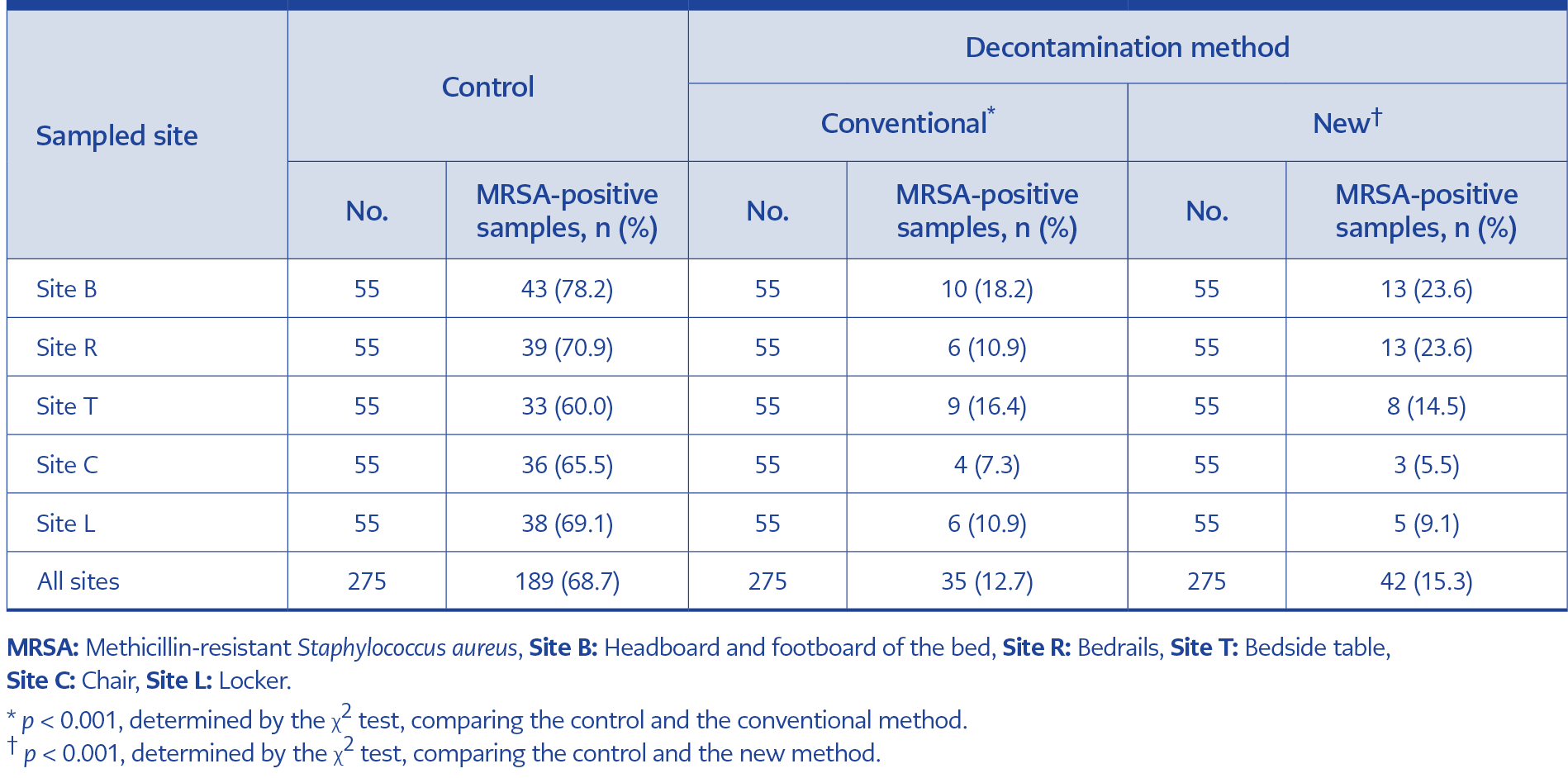
Table 2. MRSA detection rates in environmental samples before decontamination (control) and after decontamination using the conventional and new methods.
Environmental contamination assessed by MRSA culture demonstrated substantial reductions following decontamination. In total, 825 environmental samples were collected for MRSA. In the control arm, the overall failure rate of HTAs surrounding patients prior to decontamination was 68.7%. Significant reductions in MRSA contamination were observed following decontamination using both the conventional and the new method compared with the control arm (p < 0.001), with post-decontamination failure rates of 12.7% and 15.3%, respectively (Table 2). The highest rate of MRSA contamination was observed at Site B (headboard and footboard of the bed), both before decontamination (78.2%) and after decontamination (18.2% with the conventional method and 23.6% with the new method). Among the five sites sampled, Site C (chair) demonstrated the lowest post-decontamination MRSA contamination rates (7.3% with the conventional method and 5.5% with the new method).
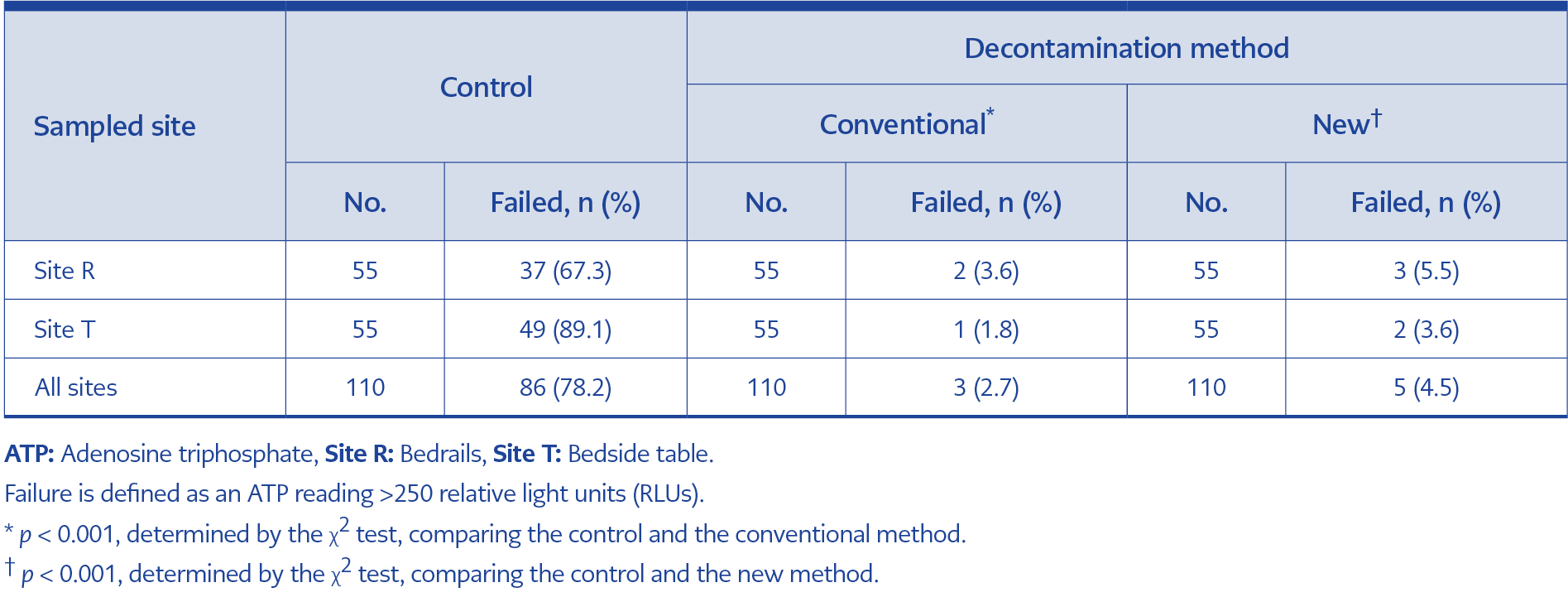
Table 3. ATP failure rates in environmental samples before decontamination (control) and after decontamination using the conventional and new methods.
A total of 330 surfaces were measured for ATP levels. In the control arm, the overall ATP failure rate among the two HTAs before decontamination was 78.2%. Following decontamination, only three (2.7%) and five (4.5%) of the samples failed the ATP threshold after the conventional and new methods, respectively (Table 3). Both methods therefore produced marked and statistically significant reductions in ATP failure rates (p < 0.001). In other words, both decontamination methods achieved passing ATP levels in over 95% of sampled HTAs. When a less stringent RLU threshold of 500 was applied, 99.1% and 100% of HTAs passed for the conventional and new methods, respectively.
Resource utilization analysis demonstrated significant reductions in both consumable use and time with the new method. The mean number of disposable wipes used per half of the patient’s surroundings was 10.2 (standard deviation [SD] 1.1) for the conventional method and 5.1 (SD 0.3) for the new method. This corresponded to a mean reduction of 5.1 disposable wipes per half of the patient’s surroundings (p < 0.001).
The mean duration required for decontamination of half of the patient’s surroundings was 8.8 minutes (SD 3.3) for the conventional method and 5.9 minutes (SD 3.1) for the new method. The new method reduced the decontamination time by an average of 5.9 minutes per patient per episode, corresponding to a 33% reduction compared with the conventional method (p < 0.001).
Economic evaluation based on current institutional costs demonstrated substantial potential savings at the healthcare system level. According to the Hospital Authority guideline, HTAs around patients under contact precautions, including those with MRSA, require environmental decontamination at least twice daily. At the time of writing, the estimated decontaminating agent cost per decontamination episode was HK$0.47 for the conventional method and HK$1.00 for the new method, while each disposable wipe costs HK$0.42. Hong Kong’s statutory minimum wage is currently HK$42.10 per hour (15). Based on these costs, the average cost saving per MRSA patient per day was estimated at HK$15.79 under currently recommended decontamination practices. Using the year 2024 as an example, at least 11,490 patients were diagnosed with MRSA from clinical specimens across all public hospitals in Hong Kong (16). To quantify the uncertainty of the projected cost estimates, nonparametric bootstrap resampling based on the observed cohort (n = 55) was performed. The bootstrap-estimated total annual cost savings were HK$6,152,671 (95% CI: HK$5,994,387 to HK$6,312,500). The corresponding annual workforce time saved was estimated at 79,418 hours (95% CI: 77,172 to 81,678 hours).
Discussion
According to the National Health Service England National Infection Prevention and Control Manual and the Hospital Authority guideline, disinfection following cleaning is standard practice for patients under contact precautions, including MDROs (17). Both cleaning and disinfection are critical components in studies evaluating environmental contamination of MDROs and HAI transmission in hospitals and long-term care facilities (18). Similar to other infection prevention and control measures, effective environmental decontamination relies on consistent adherence and may be enhanced through multimodal strategies, including education, training, audit, and feedback (19). A simple, practical decontamination method that is less time-consuming and requires fewer consumables may improve adherence to cleaning protocols without compromising efficacy. This study demonstrated that the combined detergent-disinfectant method achieved satisfactory environmental decontamination of HTAs in inpatient settings, as measured by MRSA contamination rates and ATP levels.
Chlorine-based disinfectants are widely available, easy to use, and effective against a broad range of bacterial, viral, and fungal pathogens (20). Hypochlorite (bleach) remains the most frequently used disinfectant for environmental surfaces of contact isolation rooms in hospitals in the United States (21). If used correctly, chlorine-based disinfectants can achieve efficacy comparable to that of more advanced disinfection methods against MDROs (22). Although chlorine may cause mucosal irritation, no major problems related to its routine use have been reported in Hong Kong despite more than 20 years of widespread adoption for infection control following the severe acute respiratory syndrome outbreak (20). Both the Hospital Authority guideline and the Centre for Health Protection of the Department of Health advocate diluted household bleach as an appropriate environmental disinfectant. With proper use of personal protective equipment, adequate ventilation, and appropriate training in the preparation of correct concentrations, most chlorine-based disinfectants can be used safely and effectively in healthcare settings.
While it is not specified in the Hospital Authority guideline, the Hospital Authority adopts disposable wipes rather than reusable towels for cleaning and disinfection, mainly to address residual microbiological contamination (23,24). This practice is consistent with the trend that disposable dry wipes are used more frequently in acute healthcare settings for cleaning HTAs in current practice (25).
Our findings support previous observations that HTAs closer to the patient are more likely to be contaminated (25). Site B (headboard and footboard of the bed) and Site R (bedrails) exhibited MRSA contamination rates exceeding 70%, whereas Site T (bedside table), Site C (chair), and Site L (locker), which were located farther from the patient, showed lower contamination rates. Site B remained the most frequently contaminated even after decontamination, indicating the need for particular attention during decontamination. In contrast, Site C (chair) was consistently the cleanest, likely due to easier accessibility during decontamination.
MRSA can cause severe infections, including bacteremia with high mortality, particularly in vulnerable populations such as intensive care unit patients with intravascular catheters (26). In Hong Kong, the prevalence of MRSA carriage has been reported to be as high as 39% (27). In addition, approximately 40% of S. aureus isolates are methicillin-resistant in public hospitals, and over 10,000 cases of MRSA infection are observed every year, making MRSA currently the second most commonly reported MDRO after extended-spectrum beta-lactamase producing Escherichia coli (16). In contrast to reports from several other countries, we did not observe an increase in hospital-onset MRSA bacteremia and other infections following the COVID-19 pandemic (28).
From a resource management perspective, the new method is attractive, offering annual savings of over six million Hong Kong dollars by applying it to patients with MRSA, and, most importantly, without compromising decontamination performance. The projected savings are likely underestimated because labor costs were calculated using the minimum wage, and the MRSA caseload included only patients with infection, excluding colonized patients despite requiring the same level of environmental decontamination. The projected cost savings should be interpreted with caution, as they are based on extrapolation from a relatively small cohort. Nevertheless, uncertainty around these estimates was explored using bootstrap resampling, which demonstrated relatively narrow confidence intervals around the projected cost and time savings.
In addition, although chlorine-based disinfectants are known to have broad antimicrobial activity against a range of bacteria and fungi, the present study evaluated environmental contamination using MRSA only. Therefore, the effectiveness of the combined detergent–disinfectant against other MDROs, such as VRE, CRE, or Candida auris, remains to be confirmed in real-world settings. Future studies evaluating these epidemiologically important organisms would be valuable to further assess the generalizability of this approach. Nonetheless, MRSA remains one of the most prevalent MDROs in the local healthcare setting, and its associated burden is substantial (16). As such, even when limited to MRSA, the observed improvements in workflow efficiency and potential cost savings may already have meaningful implications for infection control practice.
Beyond direct financial benefits, reduced consumption of disposable materials may also support environmental sustainability. In addition, a simpler workflow requiring less time and fewer steps may further enhance adherence.
This study has several limitations. The sample size was not powered for a direct head-to-head statistical comparison or non-inferiority analysis between the two decontamination methods. As such, although both methods were shown to be effective at reducing environmental contamination, the study was not designed to determine which is superior. In addition, the allocation of the two methods to each half of the patient environment could not be blinded, which may introduce potential bias in the application of cleaning procedures. Furthermore, outcomes were limited to environmental contamination measures, including MRSA culture and ATP bioluminescence, and clinical outcomes such as MRSA transmission or infection were not assessed. Therefore, the impact of the intervention on infection prevention remains uncertain. Moreover, our laboratory does not routinely process environmental samples; therefore, quantitative investigations, such as aerobic colony counts, which may be considered a more accurate reflection of microbiological burden, could not be performed. Nevertheless, MRSA detection by culture is a well-established modality widely reported in the literature, and MRSA is considered a “marker” MDRO that reflects HAI risk (29,30). Furthermore, ATP measurement as an indicator of bioburden has been shown to correlate with microbiological measures of contamination (14). Finally, the cost analysis in this study is not a formal cost-effectiveness evaluation, as infection incidence was not assessed. Such an assessment would require a period of observation with adjustment for confounding factors, including infection control practices and patient characteristics. The projected cost and time savings were derived from extrapolation of a relatively small cohort (n = 55), with uncertainty estimated using bootstrap resampling (10,000 replications). These projections may not fully capture variability across different clinical settings or patient populations. These estimates should therefore be regarded as indicative rather than definitive.
Despite these limitations, the study also has several notable strengths. First, its pragmatic design reflects real-world practice, as decontamination was performed using methods identical to those taught to cleaning staff. Second, simultaneous application of two intervention methods to different halves of the same patient environment minimized confounding from patient-specific factors. Third, measurements of both MRSA and ATP bioluminescence provide an objective and comprehensive assessment of environmental cleanliness.
In conclusion, the combined chlorine-based detergent-disinfectant method is effective at reducing environmental surface contamination in clinical areas surrounding MRSA patients. Given the substantial burden of healthcare-associated infections, wider implementation of this simplified decontamination strategy could improve operational efficiency while maintaining environmental hygiene. Its routine adoption in inpatient settings may therefore be considered as part of a multimodal infection prevention strategy.