Tuberculosis has affected humanity for centuries, shaping societies and appearing in literary works, and it remains one of the most persistent infectious diseases worldwide. Despite remarkable advances in diagnosis, treatment, and vaccination, it continues to represent a major challenge to global health.
In Türkiye, tuberculosis was recognized as a major public health problem in the early years of the Republic. During his March 1, 1923, speech at the Turkish Grand National Assembly (TBMM), Mustafa Kemal Atatürk described tuberculosis as one of the most destructive diseases threatening the nation and emphasized the need for urgent control measures. After the establishment of the Republic, tuberculosis control became a key component of national health policy. In 1923, the Republic’s first Minister of Health, Dr. Refik Saydam, introduced an eight-point health program prioritizing the construction of tuberculosis sanatoriums. In the same year, the first Tuberculosis Dispensary began operating with the approval of the Ministry of Health, and the 50-bed Heybeliada Sanatorium was opened in 1924 for the treatment of diagnosed patients (1).
Although tuberculosis mortality decreased from the 1930s to the early 1940s due to control efforts, the disease resurged during the war years. By 1945, tuberculosis incidence had increased again, as observed in many infectious diseases during periods of war and social disruption. Tuberculosis control efforts in Türkiye expanded nationwide and became more systematic after 1945. Concurrently, Bacille Calmette-Guérin (BCG) vaccination programs expanded significantly, enabling the intradermal administration of the vaccine to individuals of all ages in addition to newborns. By the early 1950s, many people in Türkiye had been vaccinated against tuberculosis, and in 1952, the world’s first tuberculosis research center was established in Istanbul in collaboration with the World Health Organization (WHO) (1).
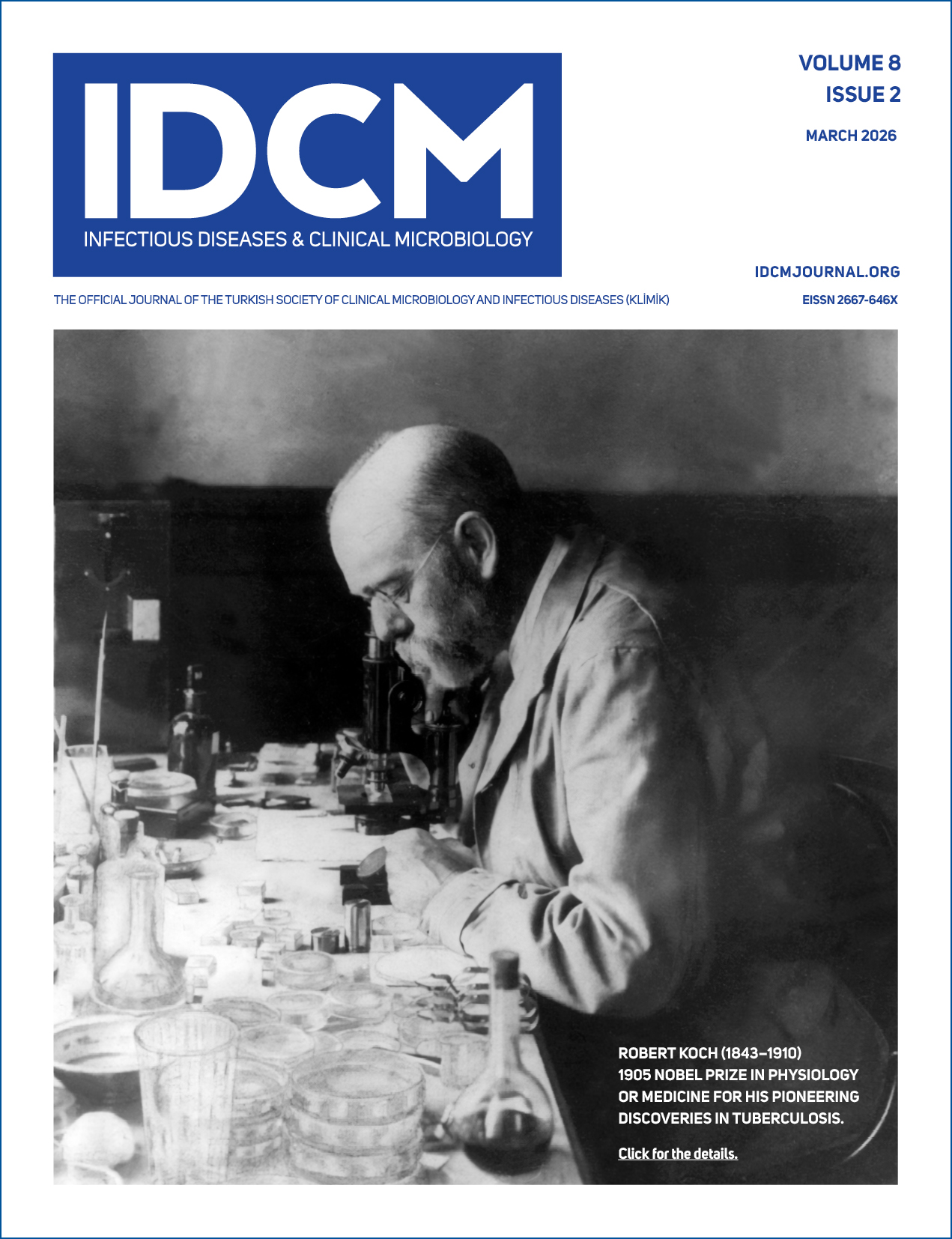
Figure. IDCM Volume 8 Issue 2 cover.
Over the past century, tuberculosis control programs have contributed to a significant reduction in the tuberculosis burden in Türkiye through dispensary networks, sanatorium care, BCG vaccination campaigns, and sustained public health initiatives. In recent years, the incidence has declined to 11.4 per 100,000 population (2). Initiated in the early years of the Republic, these efforts gradually became institutionalized and evolved into a national control program.
Despite progress in tuberculosis control, the disease remains a significant public health concern. A large reservoir of latent infection continues to generate new cases, and social determinants such as aging populations, overcrowded living conditions, diabetes, malnutrition, migration, and human immunodeficiency virus (HIV) infection contribute to the ongoing burden. In Türkiye, the proportion of foreign-born tuberculosis patients has increased in recent years, reaching 15% nationally and 25.8% in Istanbul. Drug resistance is also more prevalent among this population, with multidrug-resistant tuberculosis (MDR-TB) reported in 2.74% of foreign-born patients compared with 0.98% of Turkish-born individuals. Overall, rifampicin-resistant or MDR-TB was identified in 3.4% of pulmonary cases and 8.9% of previously treated patients. In parallel, the number of people living with HIV has increased in Türkiye over the past decade, accompanied by a gradual rise in tuberculosis-HIV co-infection.
In addition, the use of WHO-recommended rapid molecular diagnostics remains limited in Türkiye; only approximately 3.5% of patients diagnosed with TB are initially tested with a rapid molecular test, which is one of the lowest rates reported globally. Delays in the diagnosis of extrapulmonary forms, particularly tuberculosis meningitis and spondylodiscitis, may further complicate management and worsen outcomes (2).
Addressing these challenges requires strengthening the diagnostic capacity, particularly through expanding the use of rapid molecular tests and improving the laboratory infrastructure for extrapulmonary tuberculosis diagnosis. Targeted policies for migrant populations should include systematic screening, improved prophylaxis for household contacts, and digital tools to support adherence to treatment. Over the past century, Türkiye has built a strong public health infrastructure for tuberculosis control, which supports current strategies. These activities may be coordinated through the existing dispensary network and well-established national tuberculosis control system.
In parallel, continuous training of healthcare professionals and public awareness initiatives are required to promote early diagnosis and appropriate management. Finally, treatment outcomes may be improved by expanding access to preventive therapies, adopting shorter MDR-TB regimens, and strengthening surveillance systems and research on tuberculosis epidemiology in Türkiye (2).
Over the past century, Türkiye has demonstrated that tuberculosis can be controlled through sustained public health efforts. This progress did not occur by chance but resulted from long-term public health policies, strong institutions, laboratory capacity, and community-based tuberculosis control programs. Early diagnosis, effective treatment, and well-organized tuberculosis control programs have played key roles in this success. When wars, migration, and global crises threaten tuberculosis control in many regions, protecting and strengthening these achievements remain essential.