A 74-year-old woman had an 8-year history of post-mastectomy lymphedema of the left upper extremity following chemotherapy and radiotherapy. She presented to three different hospitals with a 2-month history of erythema, pain, and swelling involving the left arm and trunk, accompanied by fever and fatigue. After surviving the February 2023 Kahramanmaraş earthquake (magnitude 7.7), her symptoms initially began with a minor lesion on the dorsal aspect of the left arm. Her medical history was significant for heart failure and atrial fibrillation, and she was receiving apixaban therapy.
She was repeatedly diagnosed with cellulitis and treated accordingly. During this period, she developed extensive ecchymoses and severe anemia (hemoglobin level of 6 g/dL), which was presumed to be related to apixaban use. Despite multiple courses of broad-spectrum antibiotic therapy and blood transfusions, her clinical condition did not improve.
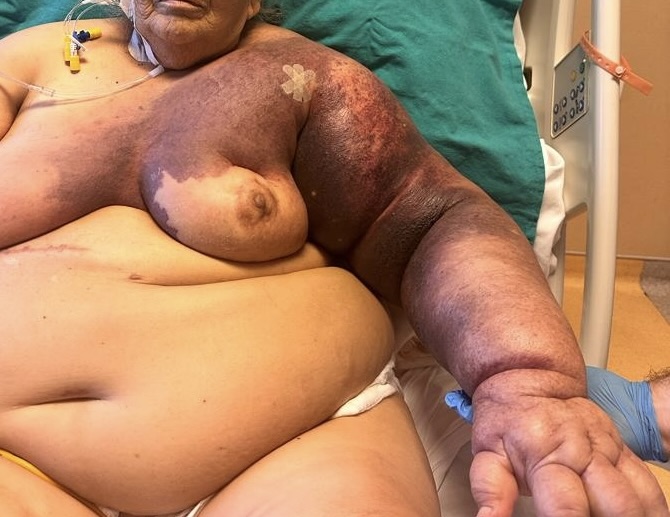
Figure 1. A 74-year-old woman with Stewart-Treves syndrome. A skin biopsy later demonstrated CD31- and D2-40-positive lymphangiosarcoma (the bandaged area indicates the biopsy site).
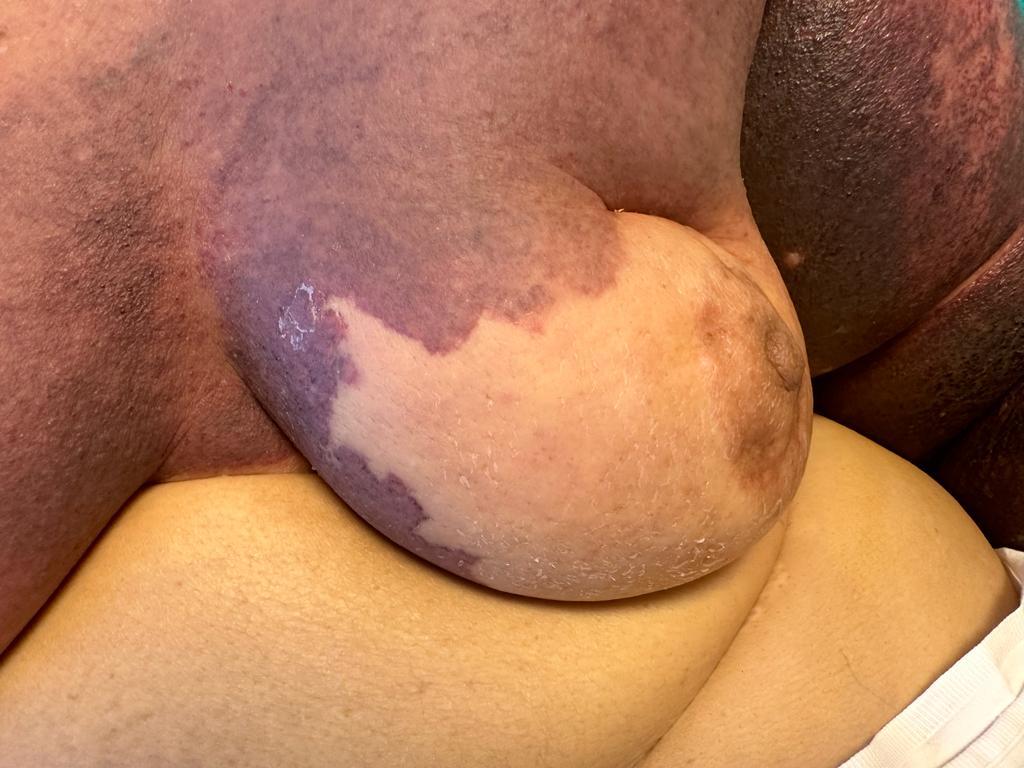
Figure 2. The skin lesion showing a well-defined demarcation line.
Upon admission to a fourth referral center (Koç University Hospital), physical examination revealed a firm, violaceous, warm plaque with a well-defined demarcation line involving the left upper extremity and ipsilateral trunk, accompanied by a massive left-sided pleural effusion (Figures 1 and 2). A skin biopsy and cytological examination of the pleural effusion fluid demonstrated CD31- and D2-40-positive lymphangiosarcoma, confirming the diagnosis of Stewart-Treves syndrome (STS). The patient died 10 days later while receiving palliative care.
Stewart-Treves syndrome is a rare and aggressive angiosarcoma that develops in the setting of chronic lymphedema (1). It originates from blood or lymphatic endothelial cells and was first described in 1948 by Stewart and Treves in six women with post-mastectomy lymphedema (1). The reported incidence of STS among breast cancer patients ranges from 0.1%–0.5%, typically occurring a decade after cancer treatment (2,3). It may also arise in lymphedema secondary to congenital abnormalities, trauma, infection, or filariasis (1–3). In the present case, the initial minor trauma during the post-earthquake period might have triggered local inflammatory changes in the chronically lymphedematous limb. Stewart-Treves syndrome can develop in nearly any anatomical region. In tropical areas, filariasis should be considered in the differential diagnosis, and cases of STS arising in filariasis-related chronic lymphedema have been reported (1).
Failure to respond to appropriate antibiotic therapy in patients with chronic lymphedema, particularly in the presence of violaceous plaques or nodules, should prompt consideration of STS. Definitive diagnosis requires skin biopsy (1–3). Early detection and timely treatment are vital because of its aggressive behavior and poor prognosis.