Türkan Saylan was born on December 13, 1935, in the Kandilli district of İstanbul, Türkiye, as the eldest child of Leyla and Fasih Saylan. Raised in a closely connected family environment with her siblings, she completed her early education in Kandilli and graduated from Kandilli Girls’ High School, an institution to which she remained deeply committed throughout her life. Inspired by the ideals of Mustafa Kemal Atatürk and the humanitarian spirit reflected in the novel Çalıkuşu, she developed, at an early age, a profound desire to serve society as a physician dedicated to underserved populations in Anatolia.
She entered İstanbul University Faculty of Medicine with exceptional enthusiasm for medical science and patient care. During her medical school years, however, she faced severe personal and medical challenges. While balancing medical education, marriage, and motherhood, she developed spinal tuberculosis, requiring prolonged immobilization for treatment. Despite thirteen months of restrictive therapy, she maintained remarkable resilience and productivity, continuing to care for children, sew clothing, and create stories that she later published as a children’s book. This difficult period profoundly shaped her perseverance, empathy, and unwavering commitment to human dignity.
After completing her medical degree, Prof. Saylan pursued specialization in dermatology and venereal diseases at the Nişantaşı Social Insurance Institution Hospital. During her clinical training, she became increasingly aware that effective medical care extends beyond diagnosis and treatment to encompass patients’ social, psychological, and economic realities. Her strong sense of responsibility, organizational ability, and solution-oriented approach distinguished her early in her career.
Her encounter with patients affected by leprosy during medical school became the defining turning point of her professional life. At a time when stigma and fear isolated individuals with leprosy from society, she chose to dedicate herself to their care. Following advanced training in the United Kingdom and France, she developed extensive expertise in leprosy and related dermatologic infectious diseases. Upon returning to Türkiye, she initiated comprehensive efforts to improve both the medical management and social rehabilitation of patients affected by leprosy.
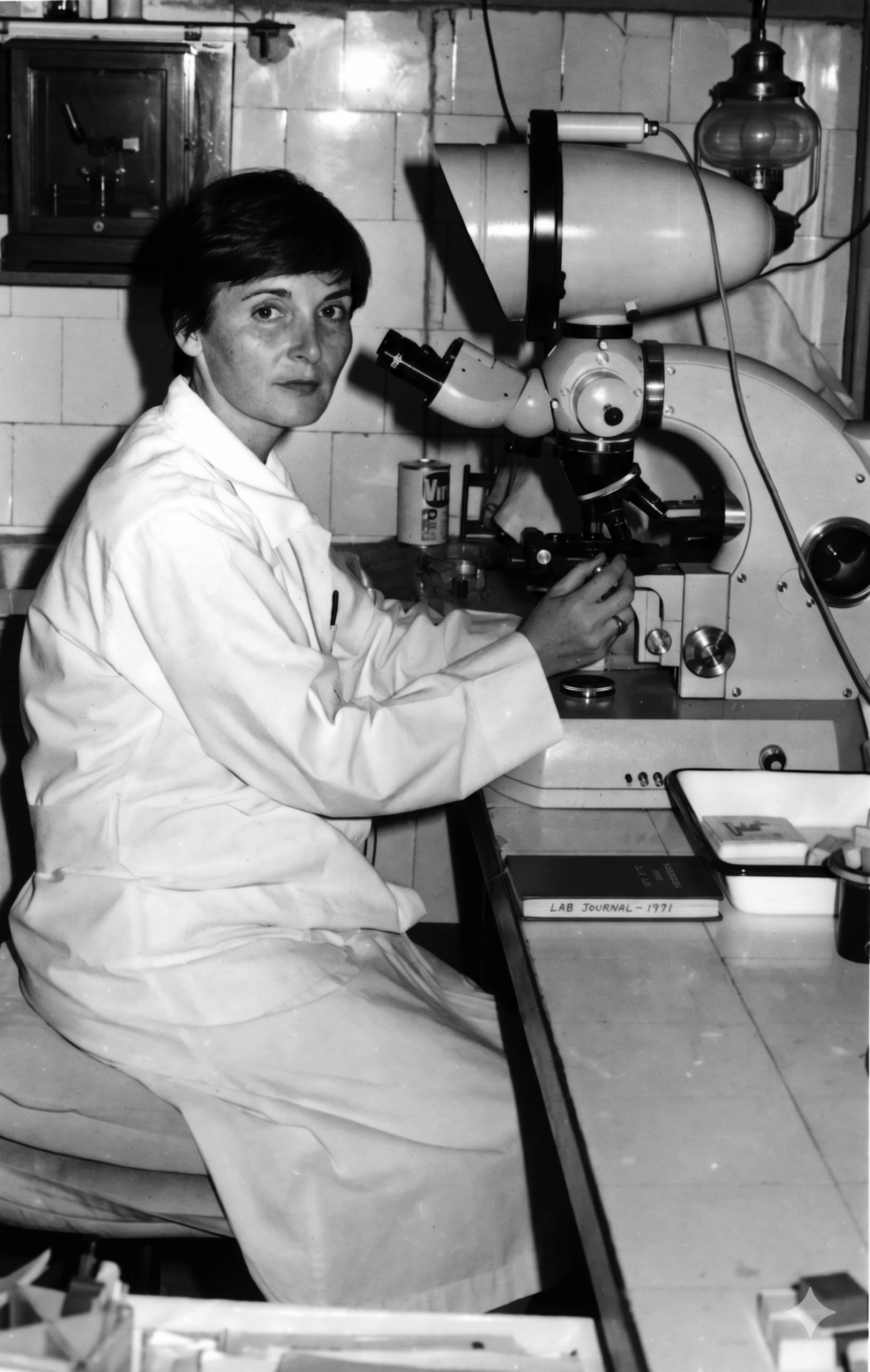
Figure. Prof. Türkan Saylan.
In 1976, she founded the Association for the Fight Against Leprosy and subsequently played a central role in transforming leprosy care in Türkiye. Under her leadership, the leprosy ward affiliated with Bakırköy Mental and Neurological Diseases Hospital evolved into the İstanbul Leprosy Hospital, where she served as chief physician until her retirement. Between 1981 and 2001, she also established and directed the İstanbul University Faculty of Medicine Leprosy Research and Practice Center, creating a multidisciplinary model that integrated clinical care, public health, rehabilitation, education, and social support.
Prof. Saylan’s work made a major contribution not only to dermatology but also to the fields of infectious diseases, clinical microbiology, and public health. Her efforts significantly advanced awareness, diagnosis, treatment accessibility, patient follow-up, and the reduction of stigma associated with chronic infectious diseases. Through her holistic approach to patient care, she demonstrated that successful management of infectious diseases requires scientific rigor together with compassion, social responsibility, and sustained community engagement.
Her international contributions were widely recognized. She served as a consultant on leprosy for the World Health Organization until 2006 and was a founding member of the International Leprosy Union, in addition to holding memberships in numerous international scientific societies. In recognition of her contributions to the medical and social rehabilitation of patients with leprosy, she received the International Gandhi Award in India in 1986.
Alongside her scientific achievements, Prof. Saylan was an influential educator and mentor. Throughout her academic career at İstanbul University Faculty of Medicine, she trained generations of medical students, residents, and young physicians. She authored numerous scientific publications, including international peer-reviewed studies, national medical articles, reviews, and educational resources. Her academic productivity was accompanied by an extraordinary commitment to social responsibility, particularly in promoting girls’ education, women’s rights, secular education, and equal opportunity through civil society initiatives.
Prof. Türkan Saylan embodied the ideal of the physician-scientist whose professional excellence was inseparable from humanitarian values. Her life demonstrated that medicine is not merely a technical discipline, but also a moral and social responsibility grounded in empathy, courage, perseverance, and service to humanity.
Her legacy continues to inspire physicians, scientists, educators, and public health professionals across generations. Through her pioneering contributions to leprosy care, infectious diseases, medical education, and social development, Prof. Türkan Saylan remains an enduring symbol of scientific integrity, compassionate care, and commitment to human dignity.