Introduction
The rapid increase in antimicrobial resistance (AMR) indicates the end of the “golden age” of antibiotics and threatens to undermine the major advances of modern medicine (1). In 2023, approximately one in six laboratory-confirmed bacterial infections worldwide were caused by antibiotic-resistant bacteria (2). Antimicrobial resistance is currently associated with approximately five million attributable deaths annually, leading to an estimated USD 693 billion in hospital costs (3,4). Therefore, infection prevention and control (IPC) practices have become more critical than ever.
Although IPC measures have become more advanced over time—particularly regarding transmission-based isolation practices, the availability of more effective disinfectants and antiseptics, improved waste management, and the establishment of regulations and legislation—substantial barriers continue to persist in many settings (5). Similarly, despite having relatively advanced IPC standards, Türkiye continues to struggle with a steadily increasing burden of AMR (6,7). Since the first inpatient IPC legislation was issued in 2005, Turkish authorities have updated the legislation twice—most recently in 2025—to integrate modern infection prevention protocols into the National Healthcare system (8). In 2008, surveillance data began to be reported to the Ministry of Health via the National Healthcare-Associated Infections Surveillance Network of Türkiye, a web-based system. Using internationally accepted definitions, this system allows for real-time monitoring and benchmarking. According to the latest report, a total of 60,370 healthcare-associated infections (HAIs) were recorded in 2024. Bloodstream infections ranked first (incidence density, 0.71), followed by pneumonia (0.30) and urinary tract infections (0.24). Furthermore, 41.5% of the agents responsible for these HAIs were reported as Enterobacterales (9).
Infection prevention and control practices should not be restricted to institutional “fishbowls” shaped by local limitations and individual efforts; instead, they must become standardized and sustainable components of healthcare delivery across all institutions. Achieving this systemic integration requires a fundamental shift in accountability, where hospital administrations are recognized as active members of the infection control committee (ICC), sharing direct responsibility for the efficacy of prevention processes.
Furthermore, a standardized approach does not imply a one-size-fits-all strategy. Effective IPC implementation must account for the inherent diversity of healthcare settings, as hospitals with varying structures encounter distinct challenges requiring tailored solutions. Consequently, it is essential to evaluate IPC barriers through the lens of specific hospital characteristics—including facility type, staffing levels, and bed capacity—to ensure that interventions are both practical and impactful.
This study presents a consensus-based synthesis derived from structured discussions held during the 7th National Healthcare-Associated Infections Symposium (Ulusal Sağlık Bakımıyla İlişkili İnfeksiyonlar Simpozyumu, USBİS), conducted on 7–8 February 2026 in İstanbul. The symposium brought together IPC leaders and healthcare professionals from different regions and healthcare settings across Türkiye through interactive plenary sessions. Audio recordings of the sessions were reviewed and transcribed, and a qualitative thematic analysis was conducted to identify recurring themes and shared concerns. The first session focused on identifying major barriers to IPC implementation, while the final session explored practical and policy-level solutions. Based on these discussions, we developed practice-oriented recommendations aimed at strengthening IPC practices at both institutional and national levels.
The publication of the 5th USBİS had already highlighted persistent difficulties in translating ICC recommendations into routine clinical practice (10). Our analysis suggests that many of these challenges remain largely unchanged nearly a decade later.

Key Barriers and Strategic Solutions for Infection Prevention and Control in Türkiye
The Most Significant Barriers in Infection Prevention and Control Practices
Lack of Reporting of Infection Control Measures
Healthcare-associated infection surveillance, hand hygiene monitoring, and infection control bundles are core components of the National Healthcare Quality Standards, and all institutions are required to measure and report these indicators. However, poor compliance rates may negatively affect institutional performance evaluations, leading to financial and administrative pressures that compromise data accuracy. For example, institutions may face penalties if they fail to meet performance targets, which can discourage transparent reporting and lead to underreporting of accurate data.
Another major challenge is the lack of objective measurement methods, particularly for hand hygiene compliance. Traditional monitoring conducted by familiar infection control nurses often triggers the Hawthorne effect, where healthcare workers temporarily improve their behavior simply because they are aware of being observed, leading to artificially inflated compliance rates (11). Automated Hand Hygiene Monitoring Systems have emerged as powerful complementary tools to traditional manual audits. These electronic systems offer significant operational advantages by providing continuous, large-scale standardized data and neutralizing the Hawthorne effect. However, while these systems excel in providing objective and reliable frequency data, they currently remain less proficient than manual observation in evaluating the clinical quality of the hand hygiene technique or identifying all of the “Five Moments” accurately (12).
Behavioral and Cultural Barriers
Many healthcare workers (HCWs) do not fully recognize the risks and consequences of infection transmission. Compliance often improves during audits but declines once observations end. Invasive device use has become normalized in intensive care units (ICUs), often without adequate reassessment of indication and duration.
Lack of belief in change processes and insufficient motivation weaken sustained commitment to IPC practices. The critical importance of role models is clear, and the behavior of senior physicians and administrators greatly influences team culture.
Education and Training Systems
The Infection Control Committees are legally responsible for providing regular training programs. The theoretical training fails to turn into behavioral change due to several factors, including incompatibility of training durations and hours with work schedules, staff’s inability to attend training due to clinical workload, and the superficial and general nature of the training. In addition to these factors, burnout and workforce shortages among healthcare workers following the pandemic underscore the need for more frequent and systematic educational sessions within healthcare facilities. Supporting these findings, Madran et al. (13) reported that a substantial proportion of healthcare workers perceive existing ICC training programs as insufficiently effective in influencing bedside behavior. Similarly, a review by Ni et al. (14) identified systemic shortcomings in training models for infection control nurses, highlighting a significant disconnect between theoretical knowledge and real-world application. This lack of evidence-based practice skills among nursing staff remains a critical barrier to bridging the gap between classroom instruction and clinical excellence.
The Lack of Motivation and Interdisciplinary Coordination
Breakdowns in interdisciplinary communication compromise the continuity of isolation precautions, environmental cleaning, and equipment disinfection. Insufficient coordination across professional groups creates practical challenges, ranging from limited time to implement infection control measures under high workload conditions to difficulties in ensuring adequate environmental cleaning between surgical cases in the operating room. To bridge these communication gaps, the active involvement of infection control physicians is paramount. Particularly in tertiary-care hospitals, the visible leadership and participation of faculty members in IPC processes serve as a catalyst for strengthening interdisciplinary collaboration. Their involvement ensures that infection control is perceived not merely as a nursing responsibility, but as a shared clinical priority integrated into the highest levels of medical decision-making.
Appropriate nurse-to-patient ratios are fundamental to infection prevention. A 1:2 nurse-to-patient ratio should be recognized as a structural prerequisite for safe IPC practice in ICUs. Furthermore, improving the professional and financial conditions of ICU nurses, infection control nurses, and nursing staff in general should be considered not only a workforce issue but a patient safety priority. Sustainable IPC systems require stable, motivated, and institutionally valued nursing teams.
Gaps in Knowledge, Definitions, and Standardization
Despite structured induction and formal IPC training programs, substantial gaps remain in fundamental IPC principles, particularly in the appropriate use of personal protective equipment and consistent adherence to standard precautions.
In addition, surveillance definitions—particularly for ventilator-associated events and urinary tract infections—are complex and difficult to implement in routine clinical practice. Disinfection processes for semi-critical medical devices remain insufficiently standardized and inadequately documented. This lack of standardization creates variability in practice and increases the risk of preventable contamination. This situation may also create an important gap between what is recommended and what can practically be implemented in clinical settings.
Challenges in Implementing ICC Decisions
One of the most important barriers to effective IPC practice is the difficulty in implementing ICC recommendations. Compliance with corrective and preventive actions proposed by the ICCs remains suboptimal. This limited adherence is largely driven by insufficient administrative support, the absence of role models, inadequate recognition of the value of IPC, weak enforcement, and progressive decline in motivation.
Regulatory changes introduced in late 2025 expanded the authority and responsibilities of ICCs (8). However, when responsibilities increase without clear operational authority and institutional support, implementation becomes more challenging. This ambiguity in accountability may weaken decision-making and delay action.
Suggestions for IPC Barriers
Quality Standards and Performance Pressure
The establishment of National Healthcare Quality Standards to define the quality benchmarks for all healthcare institutions and to provide structured guidance for implementation represents a major advancement. However, challenges arise when performance indicators derived from these standards are directly linked to hospital evaluations or administrative sanctions. Under such circumstances, institutional pressure may lead to short-term compliance aimed at meeting targets rather than achieving sustainable improvement in daily clinical practice. More concerning is the risk that excessive performance pressure may compromise data integrity. When institutions try to avoid penalties, they may overreport compliance or selectively report data, which undermines the credibility of surveillance systems and programs. Reward and penalty mechanisms should preferably be determined and implemented by the ICC of the respective hospital. A centralized approach may negatively influence outcomes.
For IPC to function effectively within national quality systems, transparency must be prioritized over punishment. Indicators for IPC should remain an essential part of healthcare quality standards; however, reported results should not be directly linked to financial or administrative penalties. The main goal should be to produce reliable data that truly reflects clinical practice rather than to achieve artificially high performance scores.
At the same time, the workload of IPC teams has increased. Reporting bundles, entering antimicrobial data, and completing multiple monitoring forms may consume significant time. When documentation grows but staffing and digital infrastructure do not improve, IPC nurses may spend more time on paperwork than on prevention activities in clinical areas. Data collection systems should be simplified and integrated into electronic hospital systems whenever possible to reduce manual data entry and duplication.
Clarifying IPC Standards and Surveillance Definitions
Although IPC and surveillance guidelines continue to improve, there is still a lack of certainty in such areas. Surveillance definitions, diagnostic criteria, bundle use, and disinfection procedures are not always clear or consistent in daily practice. Bundles should be well structured and adapted to institutional realities rather than serving as simple checklists. When they increase documentation workload, bundles lose their practical impact. Some bundle items require continuous real-time observation that is not feasible in busy units. Addressing this gap requires a clear distinction between the roles of bundles and checklists; while both are essential to patient safety, they serve fundamentally different purposes. Checklists serve as cognitive aids to ensure no step is forgotten, whereas bundles represent a set of evidence-based practices that, when implemented together, yield significantly better outcomes than when performed individually. Emphasizing this distinction is crucial to moving beyond “box-ticking” and toward authentic clinical improvement. As a result, forms may be completed without true observation, leading to reported 100% compliance that does not reflect real practice.
National guidance should be clear, feasible, and regularly updated based on feedback from frontline professionals. International guidelines should offer realistic and adaptable recommendations instead of ideal models that are difficult to implement. For example, guidelines should incorporate flexibility to accommodate resource limitations and local challenges. When definitions are clarified, processes are simplified, and expectations are aligned with daily practice, IPC systems become easier to implement and more effective.
Surveillance definitions should also be reviewed to ensure alignment between clinical diagnosis and surveillance criteria. These two perspectives often diverge; while clinicians prioritize sensitivity for individual patient care, surveillance systems require high specificity for objective benchmarking (14,15). As noted by Nascimento et al. (16), discrepancies between clinical judgment and standardized definitions—particularly in complex cases like ventilator-associated events—can lead to data fragmentation and misclassification. Aligning these criteria is essential not only for accurate reporting but also for maintaining the credibility of IPC programs among frontline healthcare providers. When clinicians treat patients for infections that are not captured by surveillance definitions, trust in the system may decrease. Greater harmonization between clinical and surveillance perspectives is needed to maintain credibility.
Strengthening Institutional IPC Culture
Education on IPC should be fundamentally restructured. Traditional lecture-based sessions are insufficient to produce long-term behavioral change. The concept of training should evolve toward experiential, unit-specific, and behavior-focused models. Small-group sessions, simulation-based training, scenario-driven exercises, and technology-supported methods—including visual materials and microbiological demonstrations—can strengthen incorporation by making risk visible. Educational timing should also be reconsidered; sessions should be delivered when healthcare professionals are available and able to actively participate. Role modeling must be formally integrated into educational strategies. Senior physicians and clinical leaders should be part of IPC-related activities and training programs. Incorporating real-time feedback from peers and supervisors will further reinforce the recognition of IPC practices.
In addition, infection prevention leadership competencies should be strengthened during infectious diseases and clinical microbiology specialty training. Publications consistently show that many specialists feel insufficiently trained in practical IPC implementation (6–7,10). Structured and competency-based IPC training during residency is essential for sustainable institutional leadership. In strengthening institutional IPC culture, not only education but also the active participation of clinical departments in all infection control policies and practices (e.g., AMR screening, hand hygiene), as well as role modeling, is essential.
On-site Leadership in IPC
A frequently overlooked but important strategy is the visible and continuous presence of IPC teams in clinical areas. When IPC activities are limited to documents, reports, or retrospective data analyses, their influence on daily practice remains weak. In contrast, regular in-person engagement of IPC physicians and nurses in clinical units enables real-time feedback, strengthens accountability, and increases awareness of infection risk among healthcare workers.
Professionals working in IPC should not function only as auditors. They should act as visible clinical leaders. For this to be sustainable, IPC nurses must be protected from non-IPC assignments, and their roles should not be diverted by unrelated administrative tasks (17). Leaders in IPC should actively participate in clinical rounds and provide immediate feedback during practice. When IPC nurses and physicians assume an active leadership role—joining rounds, modeling correct practices, and working closely with frontline teams—their impact on HCW behavior becomes substantially stronger. This issue should also be mentioned as a challenge for infection control physicians, not only for infection control nurses. Infection control practice (for physicians) is not a field that can be carried out through monthly rotation or on a temporary basis. It should be performed by physicians who have a genuine interest in this field, and adequate financial and professional support should be provided to enable this.
Changing the Workplace Climate: Building Culture, Not Just Compliance
Infection Control Committee interventions cannot bridge the gap between knowledge and practice; this requires a fundamental shift in the organizational climate. An ‘infection control climate’ is created when every employee, from surgeons to cleaning staff, recognizes IPC as a shared responsibility rather than a workload. This transformation starts creating an environment where junior staff can remind senior colleagues about hand hygiene without fear of hierarchy.
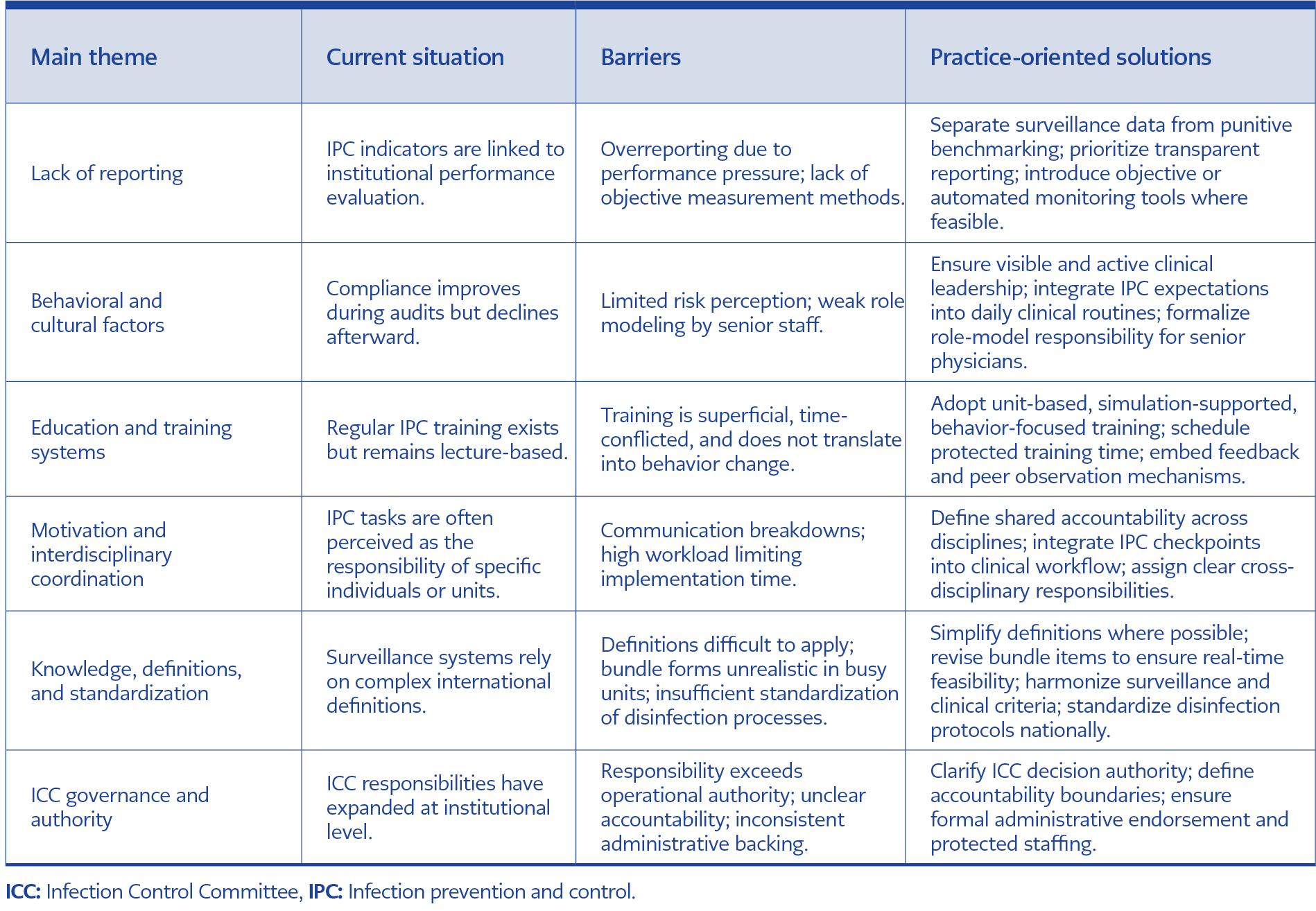
Table 1. Key barriers and practice-oriented solutions for infection prevention and control in Türkiye.
The most important factor in creating a positive workplace climate is the support of hospital administrators. When administrators give priority to IPC during daily rounds and in budget decisions, it clearly shows that patient safety is a core institutional value rather than a regulatory requirement. Administrators should demonstrate their commitment by engaging directly with staff and integrating IPC into strategic planning and decision-making. This shift in culture requires building a shared understanding that IPC is a collective responsibility, supported not only by policies but also by daily practice and institutional structures. Infrastructure-related problems that may affect infection prevention and control should be dynamically monitored together with hospital administration and addressed in a timely manner. The key barriers and the corresponding practice-oriented solutions are summarized in Table 1.
Conclusion
Türkiye established many of the structural elements required for effective IPC; however, persistent gaps remain between policy, daily practice, and institutional culture. Systems for infection prevention and control become fragile when driven primarily by performance metrics, traditional education formats, and fragmented implementation strategies. Sustainable progress will depend on a clear shift in priorities, such as valuing data credibility over perfect scores, transforming education into behavior-shaping practice, simplifying and clarifying standards, being visible and active leaders within the institution, and, most importantly, building a strong institutional infection control climate. If these five strategic directions are implemented, healthcare systems can move beyond fragile toward resilient, transparent, and self-sustaining IPC environments.
Infection prevention and control must be recognized not merely as a regulatory obligation but as a core component of patient safety infrastructure. Without aligning systems, behaviors, and institutional culture, IPC will remain a well-designed but underperforming structure. Achieving safer healthcare systems therefore depends on the consistent implementation of these systemic changes.