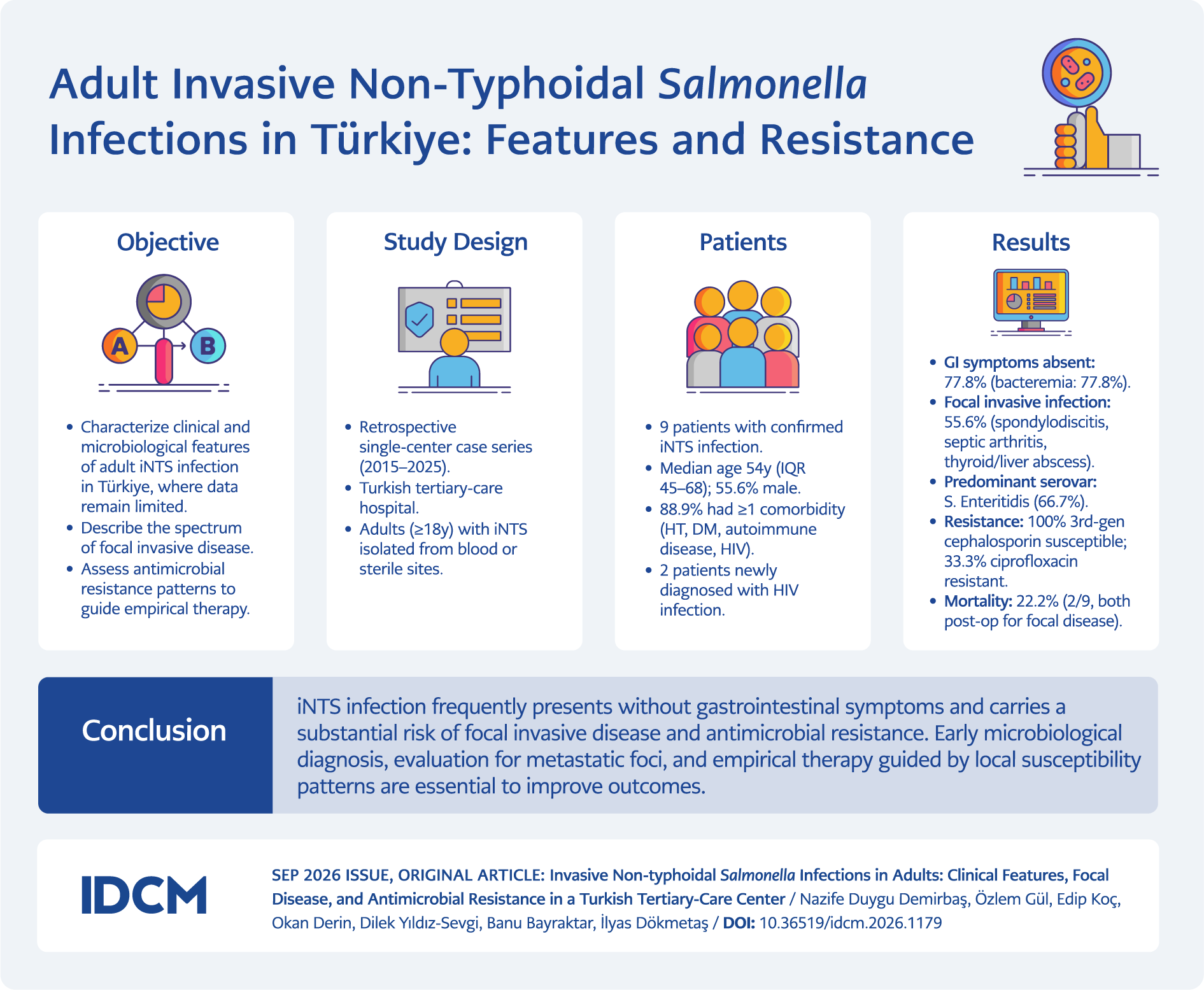
Graphical Abstract
Introduction
Non-typhoidal serovars of Salmonella enterica are an important cause of morbidity and mortality worldwide. Although they typically cause self-limiting gastroenteritis, they can invade the bloodstream and other normally sterile body sites, particularly in immunocompromised and older individuals and, in some settings, in children. This condition is called invasive non-typhoidal Salmonella (iNTS) infection (1–3).
Invasive non-typhoidal Salmonella infections are becoming increasingly important because of their global disease burden. According to the Global Burden of Disease (GBD) 2017 analysis, iNTS infection was associated with approximately 535,000 cases and 77,500 deaths annually, with an average case-fatality rate reported as 14.5% (1). The 2021 GBD data indicate that the highest burden of Salmonella infections occurs in Africa and South Asia, particularly in India (4). In these regions, iNTS disease is often associated with immunosuppressive conditions such as HIV infection, malnutrition, or malaria. In contrast, iNTS infections are less common in high-income countries; however, advanced age, immunosuppression, malignancy, and chronic diseases are recognized as important risk factors. Similarly, in Europe, although iNTS infections account for a small proportion of community-acquired salmonellosis cases, their morbidity and mortality burden remains significant. According to the 2024 European Union Zoonoses Report, a total of 79,703 confirmed human salmonellosis cases were reported across Europe, of which 47.1% required hospitalization, and 116 deaths were recorded, corresponding to a case-fatality rate of 0.24% (5).
Recent meta-analyses have shown that 40–60% of invasive cases are caused by S. enterica serovars Typhimurium and Enteritidis, and that genetically more invasive clones, such as ST313 and ST34, are becoming increasingly prevalent (6,7). From a microbiological perspective, antimicrobial resistance is one of the main factors complicating the treatment of iNTS. Recent global analyses have demonstrated that the increasing prevalence of strains resistant to fluoroquinolones and extended-spectrum β-lactam antibiotics has significantly raised the rates of bacteremia and mortality, particularly in low- and middle-income regions (4). This situation represents a serious burden not only clinically but also economically. A systematic review published in 2024 reported that the cost per hospitalized patient with iNTS infection ranged from 2000 to 30,000 USD (8).
The literature on iNTS infections in Türkiye is limited. Therefore, characterizing the clinical and microbiological features of iNTS infections identified through isolation of Salmonella from blood or other normally sterile body sites is important for improving recognition of this uncommon but potentially severe condition. This study aimed to describe the clinical, microbiological, and epidemiological characteristics of adult patients with microbiologically confirmed iNTS infection at a tertiary-care center in Türkiye.
Materials and Methods
This retrospective case series included adult patients (≥18 years) diagnosed with iNTS infection at a tertiary-care hospital in Türkiye between December 2015 and December 2025. Cases were identified among patients hospitalized with a diagnosis of Salmonella infection, based on the isolation of non-typhoidal Salmonella from blood or other normally sterile body fluids or tissues.
Only the first invasive episode for each patient during the study period was included in the analysis. Repeated isolates obtained from the same patient during the same infectious episode were considered duplicate isolates and were excluded.
During the study period, four patients with S. enterica serovar Typhi or Paratyphi isolated from sterile specimens were excluded from the study. In addition, patients with Salmonella isolates obtained solely from gastrointestinal samples (e.g., stool) without evidence of invasive infection were excluded. After applying these exclusion criteria, a total of 9 patients with non-typhoidal Salmonella isolated from normally sterile specimens were included in the study.
Patient data were retrospectively obtained from the hospital information management system and microbiology laboratory records. The variables evaluated included age, sex, underlying diseases, immunosuppressive conditions (HIV infection, malignancy, diabetes mellitus, chronic kidney disease, corticosteroid use, or other immunosuppressive therapy), site of infection, clinical manifestations, need for intensive care, length of hospital stay, and mortality. Invasive non-typhoidal Salmonella infection was defined as the isolation of non-typhoidal Salmonella spp. from blood or other normally sterile body fluids or tissues. Focal invasive infection was defined as microbiologically confirmed infection involving a normally sterile anatomical site, with isolation of non-typhoidal Salmonella from tissue or fluid specimens obtained directly from the affected site. Sepsis and septic shock were classified according to the Sepsis-3 criteria (9). Mortality was defined as death from any cause occurring during hospitalization or within 30 days after discharge.
Microbiological Analysis
Blood cultures and sterile tissue or body fluid specimens were processed according to routine laboratory procedures. Blood culture bottles were incubated in automated blood culture systems (BACTEC FX, Becton, Dickinson and Company, Sparks, MD, USA; BacT/ALERT, bioMérieux, Marcy-l’Étoile, France). Isolates recovered from positive blood culture bottles were identified using standard microbiological methods and matrix-assisted laser desorption/ionization time-of-flight mass spectrometry (MALDI-TOF MS). Microbiological identification by MALDI-TOF MS remained unchanged throughout the study period (2015–2025), and no major modifications were made to the routine laboratory workflow during this period. Until January 2019, Salmonella serotyping was performed at our institution according to the Kauffmann-White-Le Minor scheme. Thereafter, serotyping was performed at the National Reference Laboratory for Enteric Pathogens, Public Health General Directorate, Ministry of Health, Ankara, Türkiye, using the same scheme. Antimicrobial susceptibility testing was performed using the disk diffusion method and interpreted according to the European Committee on Antimicrobial Susceptibility Testing (EUCAST) breakpoint tables. Ciprofloxacin minimum inhibitory concentration (MIC) values were determined by E-test gradient diffusion.
Statistical Analysis
Given the descriptive nature of this case series, only descriptive analyses were performed. Continuous variables were presented as medians with interquartile ranges (IQR) or ranges, while categorical variables were expressed as numbers and percentages.
The study was conducted in accordance with the Declaration of Helsinki and was approved by the Şişli Hamidiye Etfal Training and Research Hospital Clinical Research Ethics Committee on January 6, 2026, with decision number 3315; informed consent was waived because of the retrospective nature of the study.
Results
During the 10-year study period, 9 iNTS cases were identified among 344,359 adult hospital admissions, corresponding to an incidence of approximately 0.26 cases per 10,000 admissions. All identified cases occurred between 2021 and 2025. The highest number of cases was observed in 2024 (n = 3), followed by 2023 and 2025 with two cases each, while one case was identified in both 2021 and 2022. No cases were identified between 2015 and 2020.
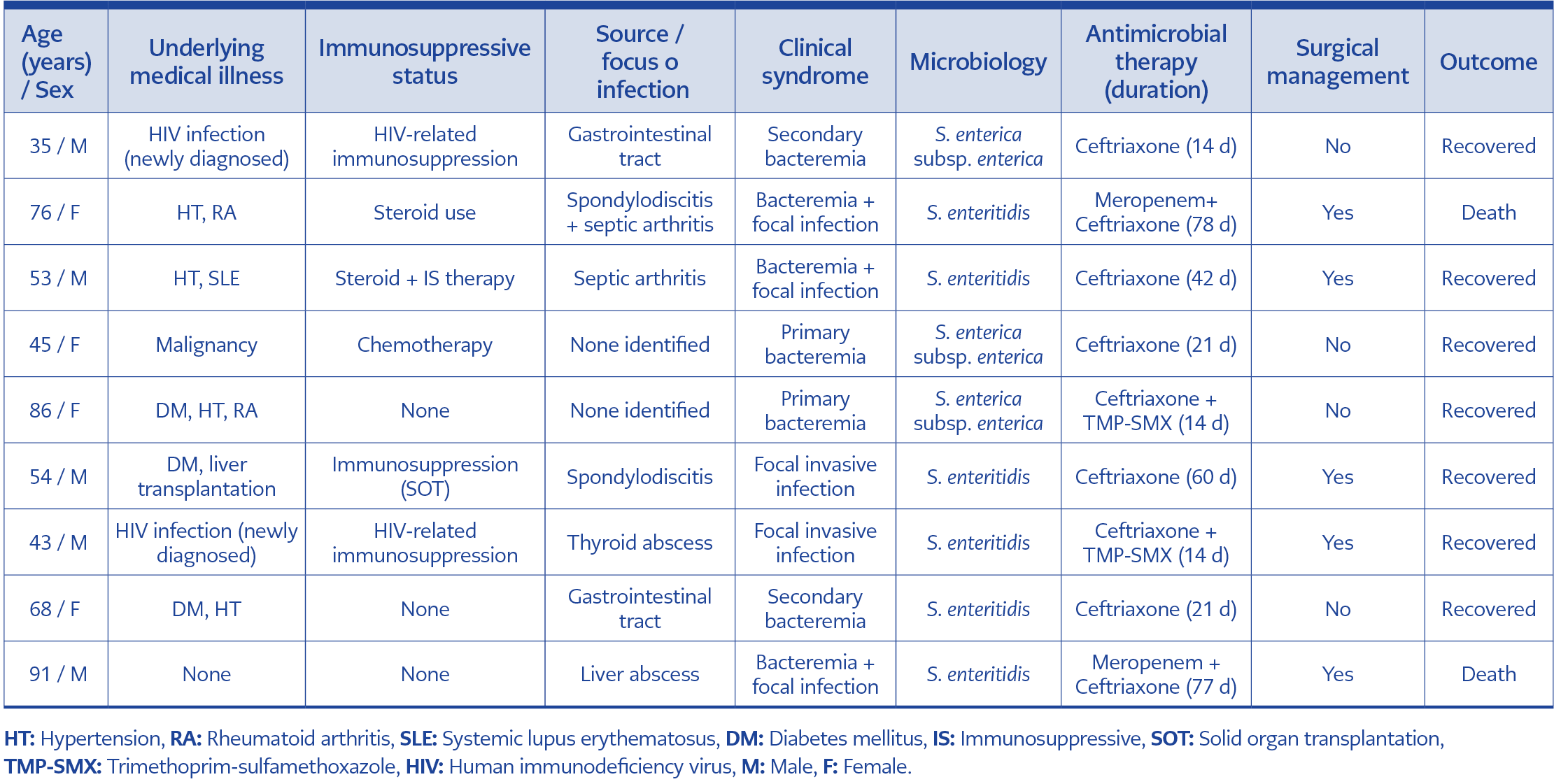
Table 1. Demographic, clinical, microbiological characteristics, management, and outcomes of patients with invasive non-typhoidal Salmonella infection (n = 9).
The clinical characteristics and accompanying comorbidities of the 9 patients are summarized in Table 1. Eight patients (88.9%) had at least one underlying medical condition at the time of infection. The most common comorbidities were hypertension (n = 4, 44.4%), diabetes mellitus (n = 3, 33.3%), and autoimmune diseases (n = 3, 33.3%). Two patients with autoimmune disease and one patient with a history of malignancy were receiving immunosuppressive therapy at the time of infection.
HIV infection was identified in two patients (22.2%), both of whom were newly diagnosed. In these patients, CD4+ cell counts were 34 and 111 cells/mm3, and HIV-RNA viral loads were 1,140,000 and 86,000 copies/mL, respectively. In the patient with a CD4+ cell count of 34 cells/mm3, antiretroviral therapy was initiated after clinical stabilization of the iNTS infection. In the patient with a CD4+ cell count of 111 cells/mm3, antiretroviral therapy was initiated at hospital discharge after completion of the diagnostic evaluation, while antimicrobial therapy for iNTS infection was continued.
Clinical Presentation and Laboratory Findings
At presentation, the most common clinical finding was fever, observed in 7/9 patients (77.8%). Gastrointestinal symptoms were present in 2 patients (22.2%), while most cases (n = 7, 77.8%) did not have typical gastroenteritis symptoms. At admission, 1 patient (11.1%) met the Sepsis-3 criteria for sepsis, and no cases of septic shock were identified.
On laboratory evaluation at presentation, the median white blood cell (WBC) count was 5.98 ×10⁹/L (IQR 4.6–10.0; range 1.91–19.51), the median C-reactive protein (CRP) level was 83 mg/L (IQR 39–282; range 19–472), and the median procalcitonin level was 0.5 ng/mL (IQR 0.21–3.23; range 0.04–14.00). The median serum creatinine level was 0.87 mg/dL (IQR 0.86–1.24; range 0.51–3.86). Among patients with available lactate measurements, the median lactate level was 1.2 mmol/L (IQR 1.20–2.05; range 1.19–3.37).
Clinical Foci, Microbiological Findings, and Antimicrobial Susceptibility
Salmonella spp. was isolated from blood or other normally sterile tissue specimens in all patients. Bacteremia was identified in 7 patients (77.8%), while focal invasive infections were identified in 5 patients (55.6%). The identified focal invasive infections included spondylodiscitis (n = 2), septic arthritis (n = 2), thyroid abscess (n = 1), and liver abscess (n = 1). Among patients with focal invasive infection, concomitant bacteremia was present in 3 of 5 cases, whereas the remaining 2 patients had localized invasive infection without bacteremia.
All 9 isolates were classified as non-typhoidal Salmonella. The most frequently identified serovar was S. enterica serovar Enteritidis, isolated in 6 patients (66.7%). The remaining 3 isolates (33.3%) could not be further serotyped because they were not characterized by the antisera available at our institution and were not referred to the National Reference Laboratory for Enteric Pathogens, Public Health General Directorate, Ministry of Health, Ankara, Türkiye, for further serotyping. No polymicrobial growth was observed.
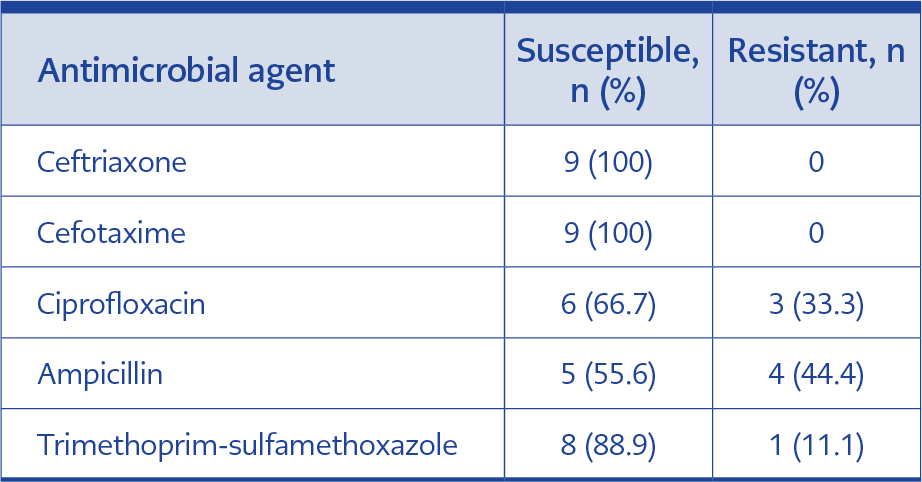
Table 2. Antimicrobial susceptibility profiles of invasive non-typhoidal Salmonella isolates (n = 9).
Antimicrobial susceptibility testing was performed for ampicillin, ciprofloxacin, trimethoprim-sulfamethoxazole, ceftriaxone, and cefotaxime. Resistance to ampicillin was detected in 4 isolates (44.4%), ciprofloxacin resistance in 3 isolates (33.3%), and trimethoprim-sulfamethoxazole resistance in 1 isolate (11.1%). Ciprofloxacin MIC values, determined by E-test gradient diffusion, ranged from 0.016 to 1 µg/mL across all 9 isolates. Three isolates had MIC values ranging from 0.5 to 1 µg/mL and were categorized as resistant according to the EUCAST clinical breakpoints. All isolates were susceptible to ceftriaxone and cefotaxime (Table 2).
Treatment and Clinical Outcomes
Empirical antimicrobial therapy was modified in 4 patients (44.4%) following the availability of culture and susceptibility results. In 2 patients, empirical ceftriaxone was switched to oral trimethoprim-sulfamethoxazole based on antimicrobial susceptibility testing, whereas empirical meropenem was de-escalated to ceftriaxone in the remaining 2 patients. Because all 9 isolates, including those resistant to ciprofloxacin, ampicillin, or trimethoprim-sulfamethoxazole, remained susceptible to ceftriaxone, ceftriaxone constituted the cornerstone of definitive therapy in patients for whom it was clinically appropriate. The median duration of hospitalization was 16 days (IQR 13.5–59.5; range 12–78 days). Surgical intervention or drainage procedures were performed in 5 patients (55.6%). Two of these patients (22.2%) required postoperative intensive care unit admission following surgery for focal invasive disease, and both subsequently died.
Follow-up blood cultures obtained 48–72 hours after initiation of antimicrobial therapy were available for 7 patients (77.8%). Persistent isolation of the same organism despite appropriate therapy was observed in 2 of the 7 patients (28.6%). One patient with septic arthritis remained bacteremic until day 10 of antimicrobial therapy and underwent surgical drainage and debridement for source control without modification of the antimicrobial regimen. Subsequent blood cultures became sterile. The other patient, who had septic arthritis with concomitant spondylodiscitis, also had persistent bacteremia at the 48–72-hour follow-up despite appropriate antimicrobial therapy; however, subsequent blood cultures became sterile without modification of the antimicrobial regimen. A recurrence of infection was documented during clinical follow-up, requiring repeat surgical intervention. Despite surgery and continued antimicrobial therapy, the patient subsequently died of postoperative respiratory failure and cardiac arrest.
Overall, 7 of the 9 patients (77.8%) were discharged with clinical improvement, whereas 2 patients (22.2%) died despite receiving appropriate antimicrobial therapy. Although only one patient met the Sepsis-3 criteria at presentation, neither of the fatal cases met these criteria on admission. Both underwent surgery for extensive focal invasive infections and were subsequently admitted to the intensive care unit for postoperative monitoring. One died from postoperative respiratory failure following septic arthritis with concomitant spondylodiscitis, whereas the other died following cardiac arrest after surgery for a liver abscess.
Discussion
Invasive non-typhoidal Salmonella infection, although less prevalent than non-invasive disease, represents a severe clinical condition associated with substantial morbidity and mortality. In this case series, iNTS infections were observed predominantly in individuals with significant underlying comorbidities and were frequently associated with a complicated clinical course. These findings support the notion that iNTS should not be regarded merely as an extension of gastrointestinal salmonellosis, but rather as a distinct invasive syndrome that warrants heightened clinical awareness, particularly among adults at high risk for invasive disease.
One notable observation in this study was that all identified iNTS cases occurred during the last 5 years of the study period. Although previous studies have reported increasing trends in iNTS incidence in some settings (10,11), our findings should not be interpreted as evidence of a true epidemiological increase at our institution. Because microbiological identification methods remained unchanged throughout the study period and annual blood culture utilization data and molecular epidemiological analyses were unavailable, it is not possible to determine whether this temporal distribution reflects a true increase in disease occurrence or differences in case detection. Instead, it may reflect temporal changes in clinical awareness and blood culture practices, changes in the immunocompromised patient population, or random variation related to the small number of cases. Nevertheless, because of the retrospective design and reliance on medical records, incomplete case ascertainment before 2021 cannot be entirely excluded. Therefore, this finding should be interpreted cautiously from an epidemiological perspective. Prospective studies incorporating standardized blood culture utilization data and molecular surveillance would help clarify whether this temporal pattern reflects a true epidemiological change.
Another important finding was the heterogeneous clinical presentation of iNTS infections. Although Salmonella infections are classically associated with gastrointestinal symptoms, most of our cases presented without prominent enteric manifestations such as diarrhea, instead manifesting as systemic infection or focal organ involvement. This observation is consistent with previous studies reporting that iNTS, particularly in adults with comorbidities, may present as a nonspecific febrile illness and may not always be accompanied by gastrointestinal symptoms (1,12,13). Although these findings should be interpreted cautiously given the small sample size of this series, the absence of typical enteric symptoms may contribute to diagnostic delays, and iNTS should therefore be considered in the differential diagnosis of Gram-negative bacteremia and focal infections.
The spectrum of focal infections observed in our cases clearly demonstrates the invasive potential of non-typhoidal Salmonella. Bone and joint involvement, deep-seated abscesses, and other localized infections reflect the pathogen’s ability to disseminate hematogenously and seed normally sterile sites. Among the focal infections identified in this series, thyroid abscess caused by non-typhoidal Salmonella represents a particularly noteworthy finding. Bacterial thyroid abscesses are rare, and Salmonella as a causative pathogen is exceptionally uncommon; as of 2020, fewer than 30 cases had been reported in the literature, predominantly in immunocompromised hosts (14). This manifestation in our cohort further illustrates the broad anatomical distribution of hematogenous dissemination in iNTS disease and supports considering Salmonella even in highly atypical infectious foci. The clinical significance of such focal involvement lies in the frequent need for prolonged treatment courses and, in some cases, surgical intervention in addition to medical therapy (15). In this context, consistent with the existing literature, our findings further support the importance of evaluating patients with iNTS bacteremia for metastatic infectious foci (16).
Host-related factors appear to play a central role in the development of iNTS infections. In our cohort, advanced age, chronic comorbid conditions, or immunosuppression were present in nearly all patients, consistent with previous reports identifying these factors as major predisposing conditions for invasive Salmonella disease (17). Globally, the incidence of iNTS is highest in sub-Saharan Africa, where infections are frequently associated with HIV infection, malaria, and malnutrition (2). In contrast, cases reported from developed countries predominantly occur in older adults and in patients with underlying comorbidities (18,19). Our findings align with these epidemiological patterns and further support the concept that, despite regional differences in disease distribution, host factors remain key determinants in the pathogenesis of invasive disease.
Notably, both HIV-infected patients in this series were newly diagnosed at the time of iNTS presentation, with markedly low CD4+ cell counts (34 and 111 cells/mm3) and high viral loads, reflecting advanced immunosuppression. This finding is clinically relevant, as iNTS bacteremia may represent the initial manifestation leading to HIV diagnosis in individuals with previously unrecognized infection. Previous studies have similarly reported that non-typhoidal Salmonella bacteremia, particularly in the absence of gastrointestinal symptoms, may serve as an early indicator of underlying immunosuppression, including undiagnosed HIV infection (20). This observation further supports the existing literature emphasizing the importance of considering underlying HIV infection in patients presenting with unexplained invasive Salmonella infection or Gram-negative bacteremia.
In our study, S. enterica serovar Enteritidis was identified as the predominant serovar among iNTS isolates (66.7%), consistent with reports from developed countries, where S. enteritidis and S. typhimurium account for a substantial proportion of invasive Salmonella infections (2,21,22).
Antimicrobial resistance in Salmonella infections remains a major global public health concern. Globally, resistance rates to fluoroquinolones and ampicillin are increasing among Salmonella isolates (21,23), and fluoroquinolone resistance has been reported to exceed 20% in endemic regions, with extensively drug-resistant (XDR) strains emerging in some countries (24). European Union (EU) surveillance data derived from all non-typhoidal human Salmonella isolates have likewise shown relatively high resistance rates, particularly to ampicillin (20.8%), sulfonamides (23.5%), tetracyclines (21.8%), and ciprofloxacin (21.4%), with increasing resistance trends for S. enteritidis documented across 15 EU member states (25). In Türkiye, a study conducted at a tertiary-care center between 2015 and 2017 reported a ciprofloxacin resistance rate of 13.3% among clinical Salmonella isolates; however, gastrointestinal isolates constituted the majority of the study population, whereas blood culture isolates represented only a small proportion (26). Compared with these reports, the ampicillin (44.4%) and ciprofloxacin (33.3%) resistance rates observed in our series were relatively high. However, because molecular characterization of antimicrobial resistance was not performed, the mechanisms underlying these resistance patterns could not be determined. This underscores the need for molecular surveillance to better understand local epidemiology and guide future empirical treatment strategies. Consistent with previous international reports, all isolates in our series remained susceptible to third-generation cephalosporins. Nevertheless, emerging reports of extended-spectrum β-lactamase (ESBL)-producing ceftriaxone-resistant non-typhoidal Salmonella isolates highlight the importance of continued surveillance (27).
All isolates in our cohort were susceptible to ceftriaxone, consistent with prevailing international trends and indicating that third-generation cephalosporins remain an important treatment option for severe iNTS infections. In our cohort, ceftriaxone was the empirical antimicrobial agent for all nine patients, consistent with standard practice for suspected severe Salmonella infection pending susceptibility results; no patient received ciprofloxacin as initial empirical therapy. This finding further supports the continued suitability of ceftriaxone as an empirical treatment option in this setting. However, the ciprofloxacin resistance rate observed in our cohort (33.3%) is directly relevant to definitive and oral step-down therapy, since fluoroquinolones are commonly used for this purpose once clinical improvement is achieved; reduced ciprofloxacin susceptibility may therefore limit oral step-down options and necessitate prolonged parenteral or alternative regimens. Although direct comparisons are limited by differences in study design, patient populations, and sample size, the elevated resistance rates observed in our cohort may reflect local resistance dynamics and underscore the need to strengthen national surveillance of antimicrobial resistance in invasive Salmonella infections in Türkiye. Accordingly, empirical therapy should be guided by local resistance profiles, and treatment should be adjusted according to culture and susceptibility results.
From a clinical outcome perspective, several cases were characterized by prolonged antimicrobial therapy and complications related to invasive disease. Although interpretation is limited by the small sample size, the observed clinical course was consistent with previous studies reporting high mortality rates in iNTS, particularly among older patients with significant comorbidities (28). Although only one patient fulfilled the Sepsis-3 criteria at presentation, both fatal cases in our series occurred in elderly patients with extensive focal disease requiring surgical intervention and multiple comorbidities. In both fatal cases, mortality was associated with postoperative cardiopulmonary complications—namely, postoperative respiratory failure and cardiac arrest—rather than with uncontrolled infection or refractory sepsis. These findings suggest that the fatal outcomes were likely multifactorial, reflecting the combined effects of advanced age, extensive focal infection necessitating surgery, significant comorbidity burden, and the increased perioperative risk associated with surgical management, rather than the severity of the infectious focus alone. This observation supports existing evidence that mortality in iNTS is frequently multifactorial, with advanced age, comorbidity burden, and surgical intervention contributing to adverse outcomes (16). Collectively, these findings highlight the importance of early diagnosis, timely initiation of effective antimicrobial therapy, careful evaluation for focal complications, and appropriate perioperative management in patients with invasive disease.
This study has several limitations. First, its retrospective and single-center design limits the generalizability of the findings. Second, the small number of cases reflects the descriptive nature of this case series and limits broader epidemiological interpretation. In addition, molecular typing and genomic analyses were not available; therefore, potential clonal relationships among isolates and molecular characterization of antimicrobial resistance, including plasmid-mediated quinolone resistance determinants and ESBL production, could not be performed. Accordingly, the epidemiological significance of the observed resistance patterns and their potential implications for antimicrobial management could not be fully assessed. Additionally, three isolates (33.3%) could not be characterized beyond the subspecies level because of technical limitations in serotyping at our institution. This also limited the epidemiological interpretation of serovar distribution in this case series. Furthermore, MIC values were available only for ciprofloxacin, as susceptibility to the other antimicrobial agents was determined by disk diffusion in routine clinical practice. Therefore, MIC-based analysis of isolates with values close to the susceptibility breakpoint could not be performed. Systematic screening for metastatic infectious foci was also not uniformly performed in all patients, raising the possibility that some focal involvements may have remained unrecognized. Finally, changes in clinical awareness and blood culture utilization over the study period may also have influenced case detection. Nevertheless, this study provides detailed real-world clinical and microbiological data on adult iNTS infections from Türkiye, where published data remain limited.
In conclusion, despite its relative rarity, iNTS infection represents an important clinical entity that can lead to severe invasive disease, particularly among adults with underlying comorbidities. The absence of gastrointestinal symptoms in some cases, the frequent occurrence of focal involvement, and increasing antimicrobial resistance observed in this series underscore the need for heightened clinical awareness and appropriate antimicrobial treatment strategies guided by local susceptibility patterns. Additional data from different geographic regions will be essential to improve understanding of iNTS epidemiology, optimize therapeutic approaches, and ultimately reduce associated morbidity and mortality.