Introduction
Pasteurella multocida is a Gram-negative, nonmotile coccobacillus commonly found in the oral and respiratory flora of cats, dogs, and other animals. Human infections typically arise after bites, scratches, or contact with respiratory secretions; however, rare infections can occur without clearly identifiable animal exposure (1). While most cases present as mild skin and soft tissue infections, severe systemic manifestations—including bacteremia, meningitis, pneumonia, and peritonitis—may occur in immunocompromised individuals (2).
Peritoneal dialysis (PD)-associated peritonitis is a major complication of chronic PD and may present with abdominal pain, fever, and cloudy effluent. Without timely and appropriate treatment, peritonitis can lead to peritoneal membrane damage and a transition to hemodialysis (3). Staphylococci are the most common causative organisms, followed by other Gram-positive bacteria and enteric Gram-negative bacilli (4). Although P. multocida is an uncommon pathogen in PD-associated peritonitis, most reported cases are linked to exposure to domestic cats (5).
Penicillin is considered the first-line therapy for P. multocida, but resistance has been reported in some cases. In such situations, second- and third-generation cephalosporins, fluoroquinolones, and tetracyclines may serve as alternatives (6,7). Sporadic cases of multidrug-resistant strains have also been described (2), emphasizing the need for susceptibility-guided antimicrobial therapy.
We present a case of P. multocida peritonitis in a patient undergoing PD, notable for two unusual features: likely exposure to stray rather than household cats and the isolation of a fluoroquinolone-resistant strain—a finding that remains uncommon in Türkiye.
Case
A 44-year-old man presented to the Nephrology Clinic of Haydarpaşa Numune Training and Research Hospital on June 25, 2024, with cloudy PD effluent, mild abdominal pain, and nausea. He had been on PD since 2017 due to end-stage renal disease secondary to diabetic nephropathy and had a history of hypertension and type 2 diabetes mellitus. He reported a previous episode of peritonitis several years earlier, though details were unavailable. He denied having household pets but described daily contact with stray cats, including feeding and petting them.
On admission, he was afebrile and hemodynamically stable. Physical examination revealed mild abdominal tenderness without guarding or rebound. The PD catheter exit site was clean, with no erythema or drainage.
Laboratory tests revealed leukocytosis (19.47 × 10⁹/L, 90.6% neutrophils) and elevated C-reactive protein (CRP) (110.77 mg/L). Biochemistry showed elevated creatinine (9.45 mg/dL), urea (89.2 mg/dL), and glucose (502 mg/dL), with reduced sodium (127.9 mEq/L), chloride (86.3 mEq/L), and calcium (8.5 mg/dL). Peritoneal fluid analysis showed a white blood cell (WBC) count of 6.617 × 10⁹/L (87.7% neutrophils). PD-related peritonitis was diagnosed, and peritoneal fluid was sent for Gram staining and culture. Although hospitalization was recommended, the patient declined admission. Empirical intraperitoneal cefazolin (2 g once daily for 10 days) was initiated.
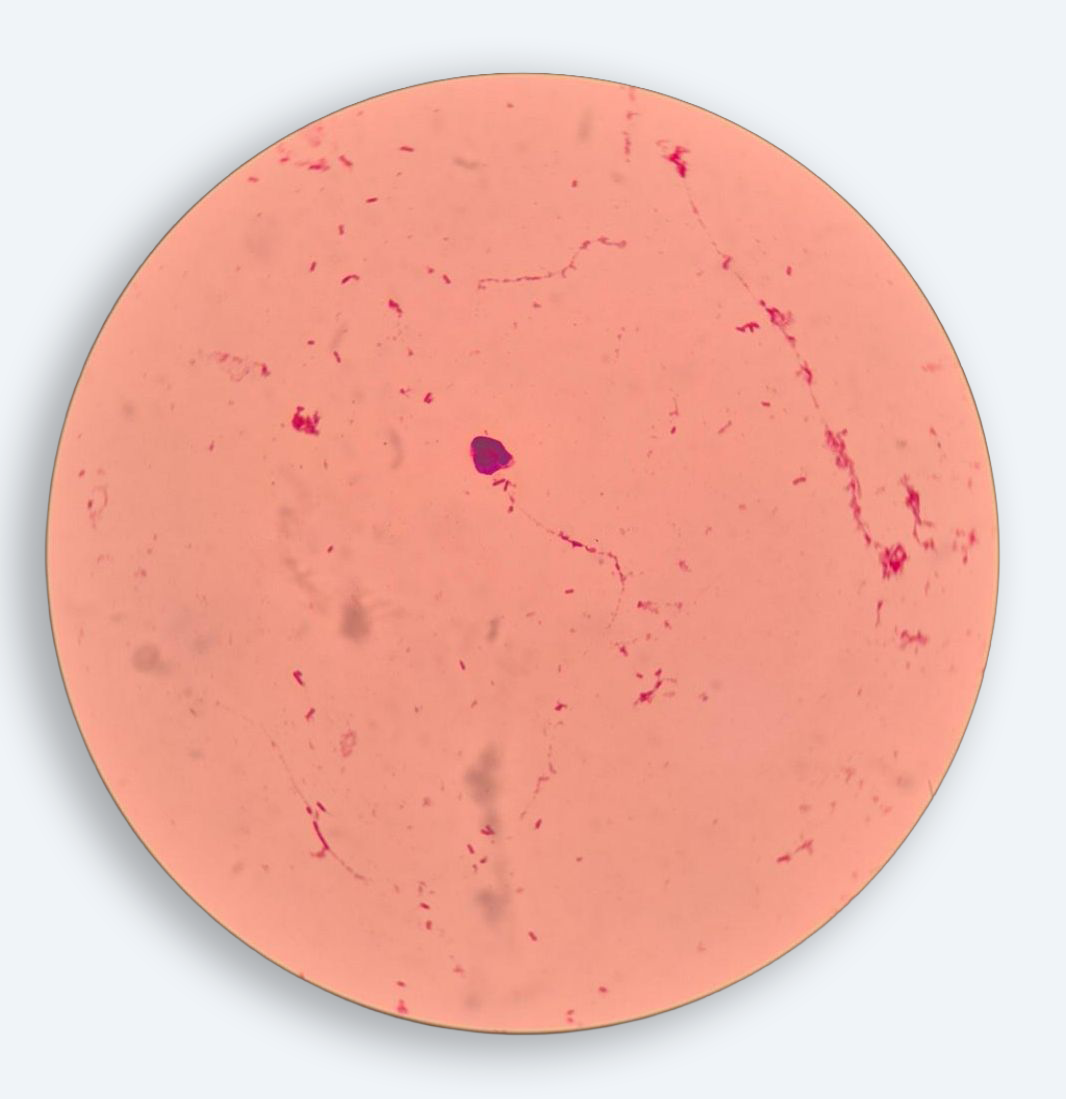
Figure 1. Gram stain of peritoneal fluid showing Gram-negative bacilli and polymorphonuclear leukocytes.
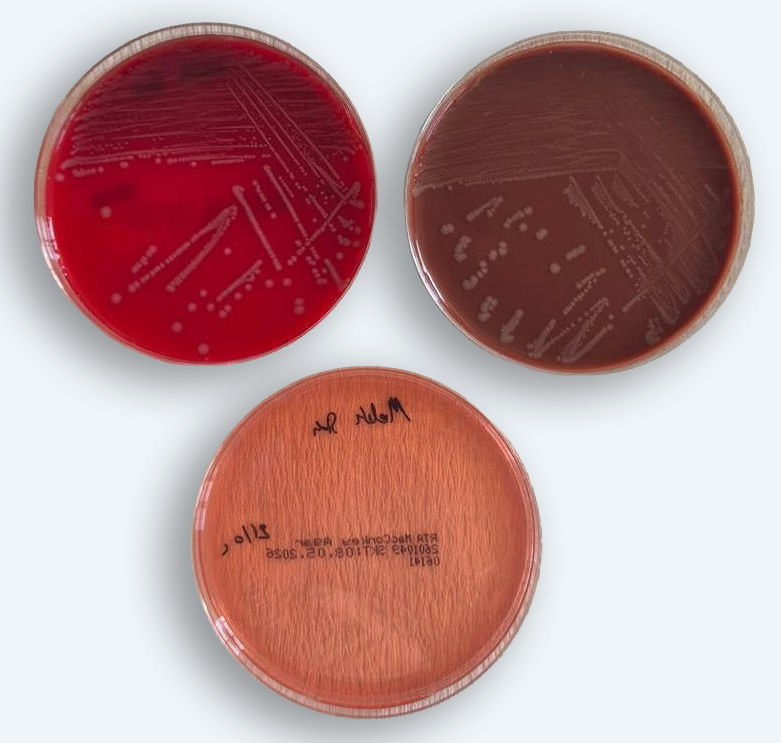
Figure 2. Pasteurella multocida colonies on blood and chocolate agar with no growth on MacConkey agar.
Gram staining revealed moderate numbers of Gram-negative bacilli with abundant polymorphonuclear leukocytes (Figure 1). Culture yielded translucent colonies on blood and chocolate agar, with no growth on MacConkey agar (Figure 2). Colonies were oxidase- and catalase-positive. The microorganism was identified as P. multocida by matrix-assisted laser desorption/ionization time-of-flight mass spectrometry (MALDI-TOF MS) (VITEK MS system with the IVD database version 3.2, bioMérieux, Marcy-l’Étoile, France). The identification of the isolate was further confirmed by 16S rRNA gene sequencing; the target region was amplified using universal primers, and the resulting amplicons were sequenced using the Oxford Nanopore MinION platform (Oxford Nanopore Technologies, Oxford, UK). The obtained sequences were compared with sequences from other isolates deposited in the National Center for Biotechnology Information database using the BLAST algorithm (blastn, National Center for Biotechnology Information, Bethesda, MD, USA). Sequence analysis of the isolate revealed 99.93% identity to P. multocida (GenBank accession no. PZ169092).
Antibiotic susceptibility testing using the Kirby-Bauer disk diffusion method according to the European Committee on Antimicrobial Susceptibility Testing (EUCAST) 14.0 guidelines (8) showed susceptibility to penicillin, cefotaxime, trimethoprim-sulfamethoxazole, and tetracycline, but resistance to ciprofloxacin and levofloxacin. The gradient diffusion test (ETEST®, bioMérieux, Marcy-l’Étoile, France) confirmed high minimum inhibitory concentration (MIC) values (32 mg/L) for both fluoroquinolones.
The patient improved rapidly by the second day of treatment, and no dialysis catheter change was needed. At follow-up, the patient was counseled regarding animal exposure and infection prevention strategies. No recurrence was observed during a one-year follow-up period.
Discussion
Although uncommon, P. multocida should be considered in PD-associated peritonitis, especially in patients with animal contact. While the majority of reported cases in the literature involve household pets, information regarding whether the animals were stray or domestic has not been provided in some cases (2). The International Society for Peritoneal Dialysis (ISPD) guidelines emphasize the importance of keeping animals away from PD environments because of the risk of zoonotic infection (4). Contamination of PD tubing or dialysis machine surfaces by domestic cats has been previously documented in several cases (1,9). In the first reported case from Türkiye, the patient also had a household cat (10).
Transmission from stray animals is rarely documented. Tseng et al. (11) reported two cases of bacteremia linked to contact with stray dogs, and Adapa et al. (12) suggested that self-colonization might contribute to non-bite infections. Our patient’s close interaction with stray cats likely served as the source of infection, either through hand contamination or transient colonization. This highlights the need to counsel PD patients—particularly in urban areas with abundant stray animals—on minimizing both direct and indirect contact with animals.
Although empirical therapy in our case consisted of cefazolin monotherapy, primarily because the patient declined hospitalization, empirical treatment for PD-associated peritonitis is generally initiated with two agents providing coverage for both Gram-positive and Gram-negative organisms (4), and P. multocida is usually susceptible to β-lactams (6,7). However, poor responses have been reported with oxacillin, dicloxacillin, first-generation cephalosporins, and clindamycin due to inadequate activity against this organism (1). Sporadic antimicrobial resistance, including resistance to β-lactams and fluoroquinolones, has been documented. Wei et al. (2) reported that more than 85% of the isolates included in their study were susceptible to quinolones. Mu et al. (13) conducted a review of 28 cases of P. multocida peritoneal dialysis-associated peritonitis in 2020. Among cases in which these agents were tested, no resistance to ciprofloxacin and levofloxacin was reported. The fluoroquinolone resistance of our isolate is notable, as fluoroquinolones are considered suitable alternatives for patients with β-lactam allergy (6,7). Therefore, susceptibility testing remains essential for appropriate management.
The One Health approach underlines the interconnectedness of human, animal, and environmental health (14). P. multocida and its resistance patterns can circulate among companion animals, stray animals, and humans. Surveillance efforts such as the European Antimicrobial Resistance Surveillance Network in Veterinary Medicine (EARS-Vet) monitor resistance trends in key animal species, including cats, and bacterial species such as P. multocida (15). Current data on the carriage and antibiotic resistance of P. multocida among stray and domestic cats remain limited and geographically variable (16). In this context, the fluoroquinolone-resistant strain detected in our case underscores the need for expanded surveillance and integrated human-animal health strategies.
Conclusion
This case highlights the importance of taking a thorough animal exposure history in PD patients and reinforces the need for patient education on hygiene and avoiding contact with stray animals. The emergence of a fluoroquinolone-resistant P. multocida strain is noteworthy in the context of national and international data, emphasizing the importance of the One Health approach in understanding zoonotic infections and antimicrobial resistance.